Saj is the material with the worst reputation and the best value in the Saudi kitchen market. Say “saj kitchen” and many people picture something cheap and institutional. Say “powder-coated steel kitchen” and the same person pictures something modern and durable. They are the same thing. The reputation comes from a generation of badly made saj kitchens, not from the metal.
Our position is simple: saj gives you the longest life per riyal of any material we make. It is metal — it does not swell, it does not rot, it does not host insects, and it is not afraid of water. And it costs less than aluminium.
We manufacture saj steel kitchens in our own Riyadh factory and install them with our own crew in Riyadh, Al-Ahsa, Buraydah and Hail, with a written ten-year warranty.
What saj actually is
“Saj” is the common Arabic term for a steel sheet, folded and formed into cabinet bodies and door panels, then coated. The kitchen is built from formed metal rather than from board with a skin on it — which is a fundamentally different construction from every other material on this site except aluminium.
Three things decide whether a saj kitchen is excellent or awful:
- Sheet gauge. The thickness of the steel. This is the single most important number, and it is the number cheap workshops never state. Thin sheet flexes when you press it, and a door that flexes will never sit flush for ten years.
- The coating and how it was applied. Electrostatic powder coating, oven-cured is the correct process — the powder is charged, attracted to the earthed metal, and then baked into a continuous film bonded to the steel. Spray paint applied in a back room is not the same thing and will chip and rust at every scratch.
- Whether cut edges are treated. Steel rusts where it is cut and left bare. A properly made saj kitchen has every cut edge folded, sealed or coated. A badly made one has raw edges inside the cabinet that you never see until rust appears at the base of a door.
So the question to ask is not “how much per metre”. It is: “what gauge is the sheet, is the coating oven-cured powder, and how are the cut edges treated?” Those three answers separate a kitchen that outlives its owner’s interest from one that disappoints in two years.
The two types of saj we build
Plain saj
Flat formed steel fronts. Clean, minimal, and the least expensive metal kitchen we make. Right for service kitchens, rental properties, utility rooms and anyone who wants metal durability with no decorative ambition.
Saj 5 cm (reinforced profile)
A heavier formed profile around the front, roughly five centimetres deep, which adds rigidity and a more substantial appearance. The door feels heavier in the hand, holds its shape better over years, and reads as furniture rather than as fitted metal.
Is the difference worth paying for? Our honest answer: yes if the kitchen is a main kitchen used every day, and no if it is a service kitchen or a rental unit where plain saj will do the same job. We will say which we think you need after seeing the space — and we have recommended plain saj to clients who came in asking for the 5 cm.
These two used to be sold on our site as two separate pages competing for the same search, which split their strength and confused customers. They are now one page that explains both and tells you plainly which suits you and when the extra cost is not justified.
Why saj suits Saudi kitchens
- It does not absorb water. Metal has no fibres to swell. The failure that kills board-based kitchens — the puffed base under the sink, the swollen plinth — does not exist here.
- Heat does not deform it. A kitchen sealed up all day in a Riyadh summer reaches temperatures that trouble some boards and some glossy films. Steel is indifferent.
- Humidity is manageable. With proper coating and treated edges, saj handles Al-Ahsa humidity far better than any board.
- Insects have nothing to eat and mould has nothing to grow on. An unglamorous advantage owners appreciate five years in.
- It is the cheapest metal kitchen available. If durability is your priority and your budget is middling, this is the answer — not a compromise version of the answer.
- It is repairable in pieces and fully recyclable at end of life.
Who should choose saj — and who should not
We recommend it if:
- You want the longest service life for the money and you are not chasing a luxury finish.
- The kitchen is used heavily, with real cooking and real steam.
- You are in Al-Ahsa or another humid location and full aluminium is above budget.
- You are fitting a service kitchen, a utility room, a staff kitchen or a rental property.
- You own multiple units and want a repeatable cost with spare parts that are always available.
- You have had a board kitchen fail on you and you want that failure mode gone rather than managed.
We do not recommend it if:
- You want deep gloss — that is acrylic or tempered glass.
- You want warmth and grain — that is natural wood. Saj finishes do include wood effects, but the range is narrower than in aluminium and considerably narrower than real timber.
- The kitchen is the visual centrepiece of an open-plan reception area and appearance outranks everything. Saj can look very good, but it will not out-glamour acrylic or glass and we will not pretend otherwise.
And the drawbacks? Five, stated plainly
- Thin sheet dents, and metal does not spring back. A dent in steel is permanent. The answer is gauge, stated as a number in the quotation — not reassurance.
- Rust is possible where the coating is broken and the edge is bare. This is the one honest vulnerability of saj, and it is entirely a workmanship issue. Folded and sealed edges plus oven-cured powder coating remove it. Raw cut edges inside a cheap cabinet are where saj earns its bad reputation.
- The finish range is narrower. Powder colours are plentiful, but the convincing wood-effect thermal-transfer range is wider in aluminium. If a timber look matters a great deal to you, aluminium is the better metal.
- Poor hardware ruins good metal. Steel doors are heavy. With underrated hinges they sag within a year, and a sagging metal door damages the body it hangs on. Soft-close hinges rated for the door weight are structural here, not a comfort upgrade.
- It conducts heat. Units immediately beside a built-in oven need thermal isolation. We fit it as standard, but you should see it as a line item.
Five drawbacks, and four of them are specification questions. Only the finish range is a genuine limit of the material.
How to tell a good saj kitchen from a bad one — seven checks
- Ask for the sheet gauge as a number. The most important question on this page. A supplier who answers “it’s strong, don’t worry” is telling you the number is not in his favour.
- Press the centre of a door with your thumb. It should not flex visibly. Any give you can produce by hand becomes a misaligned door within a year.
- Pick the door up. Properly gauged steel has real mass. If it feels like a biscuit tin, the sheet is thin.
- Look inside the cabinet at the cut edges. This is the check that matters most and the one nobody does. Edges should be folded, sealed or coated — never bare bright metal. Bare cut edges inside a cabinet are where rust starts, out of sight, for years before you notice it.
- Ask how the coating was applied. The right answer is electrostatic powder coating, oven-cured. “Painted” or “sprayed” is a different and inferior process.
- Run a coin lightly along an offcut, not a finished door. A cured powder coat resists; spray paint marks immediately. Ask the supplier to do it on his own sample.
- Open and close a sample door ten times. Soft-close should be silent and smooth from the first centimetre. Any metallic clack means the hinge is underrated for the weight.
Do these checks with us as readily as with anyone else. We are not asking for blind trust — we are asking you to compare specifications.
Saj kitchens we built ourselves
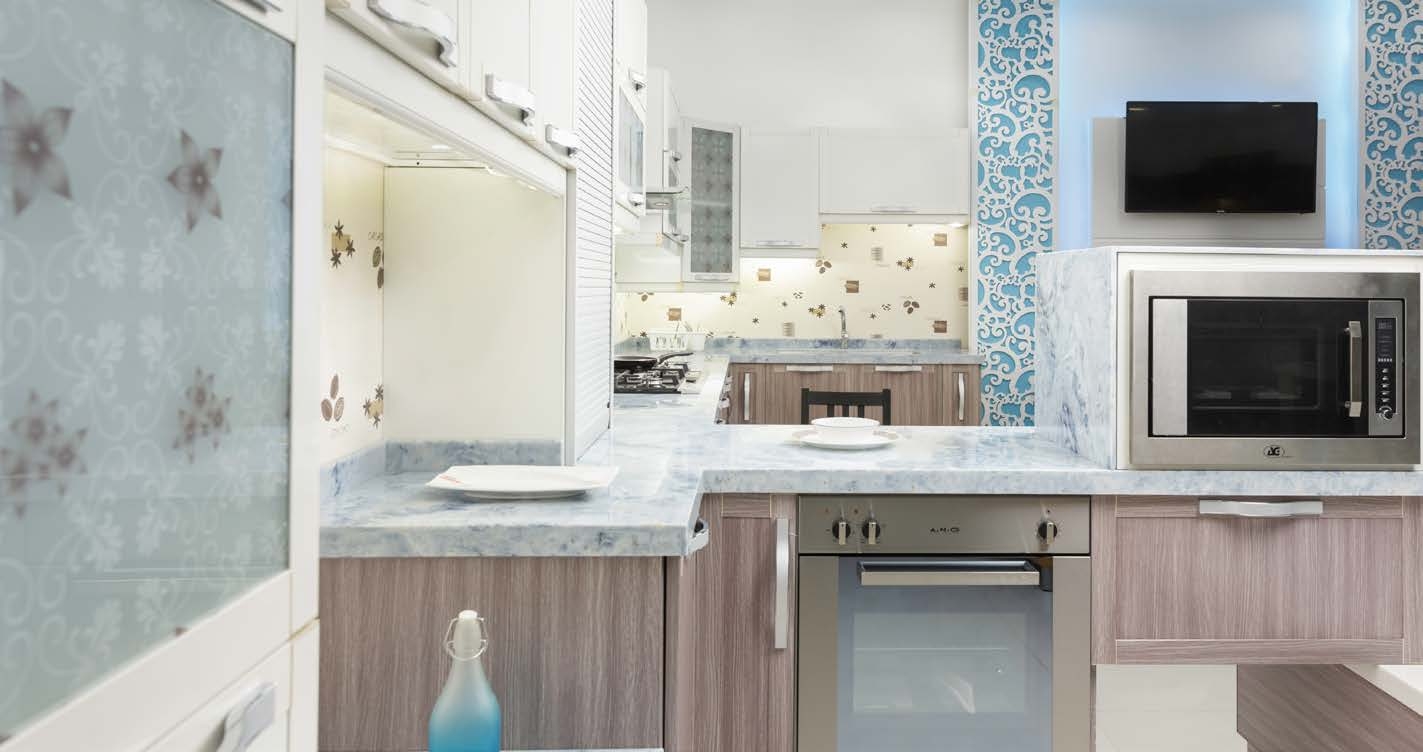
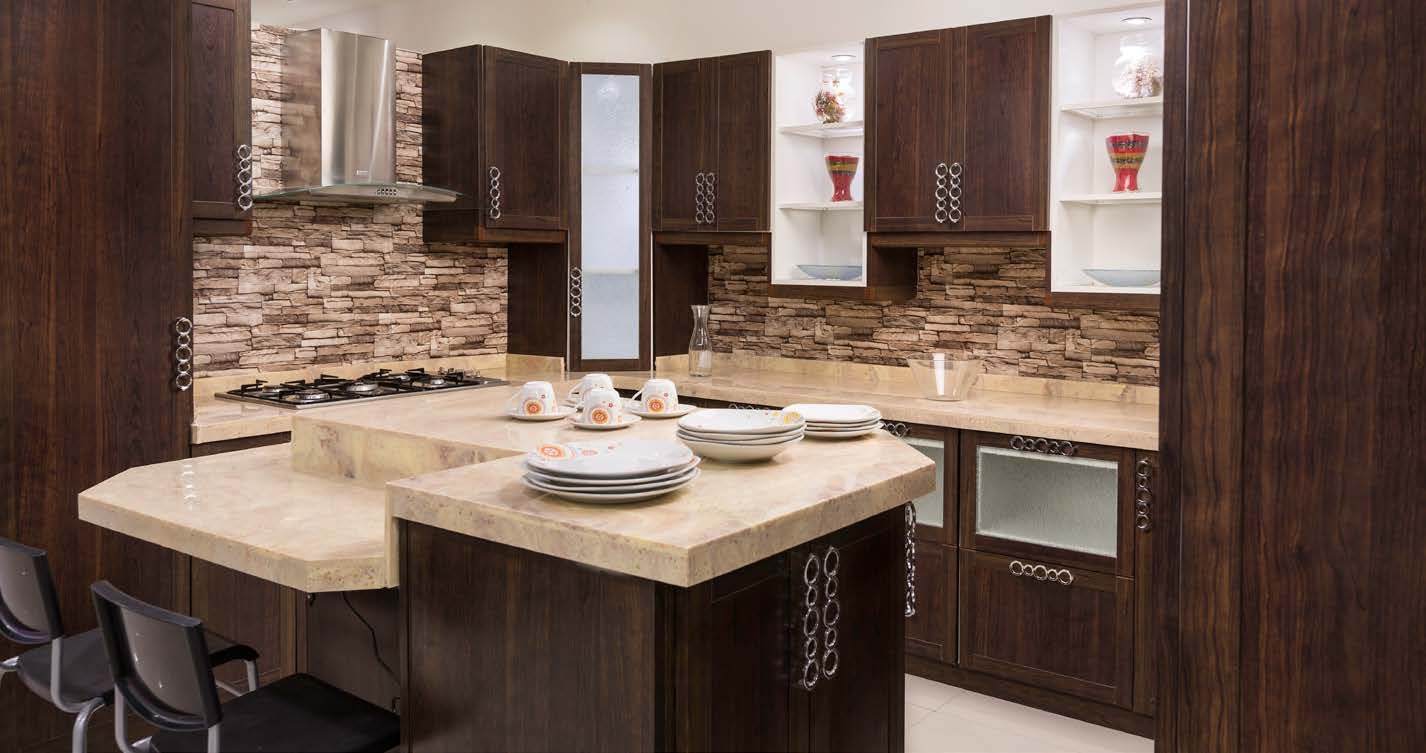
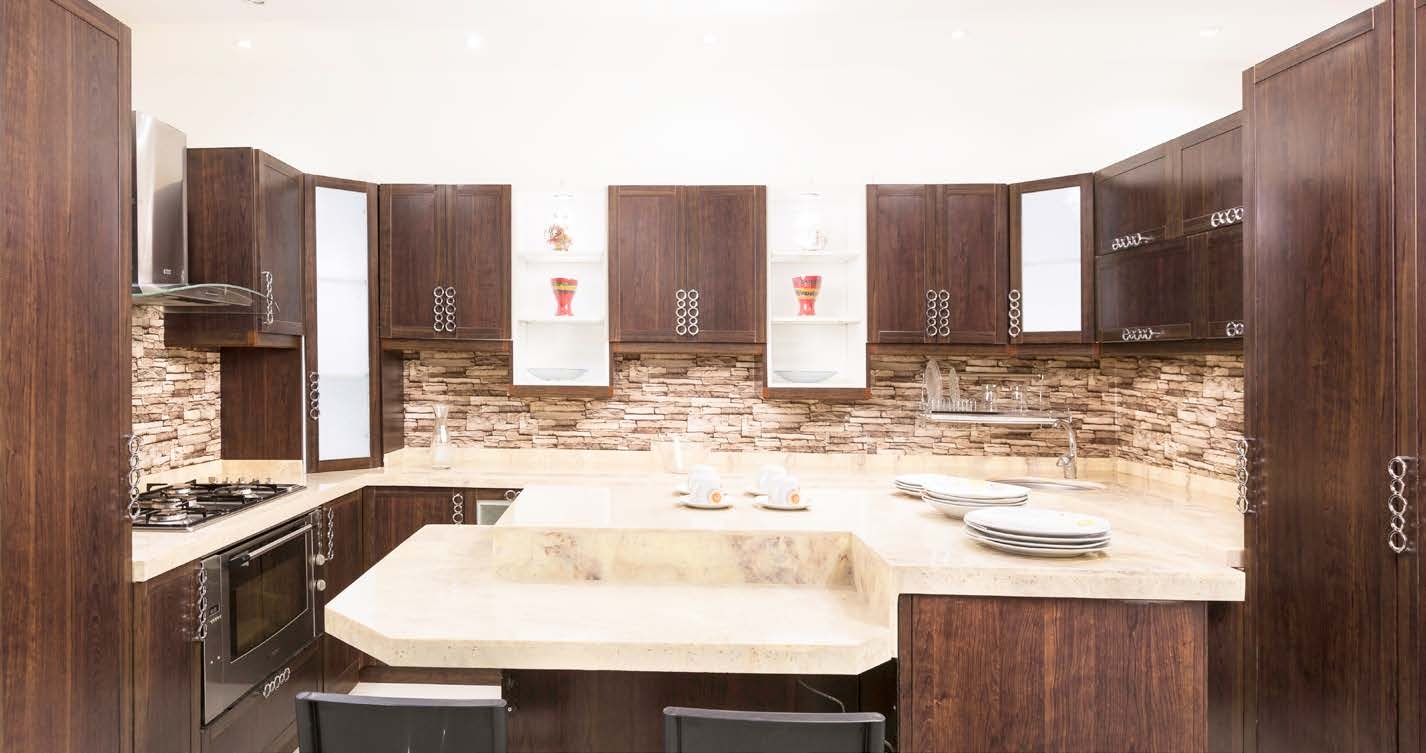
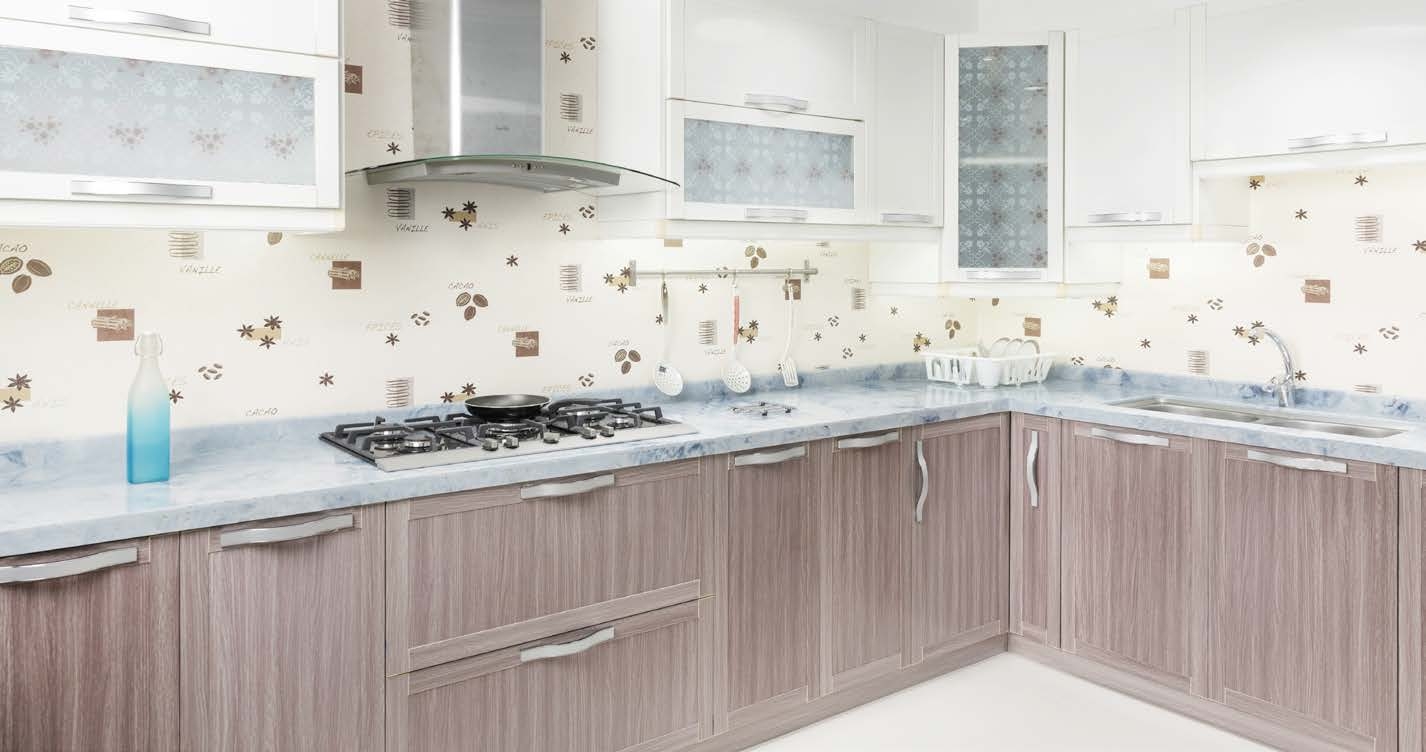
Not stock photography. Each image is a saj steel kitchen that left our Riyadh factory and was installed in a client’s home — judge the metalwork, not the adjectives.
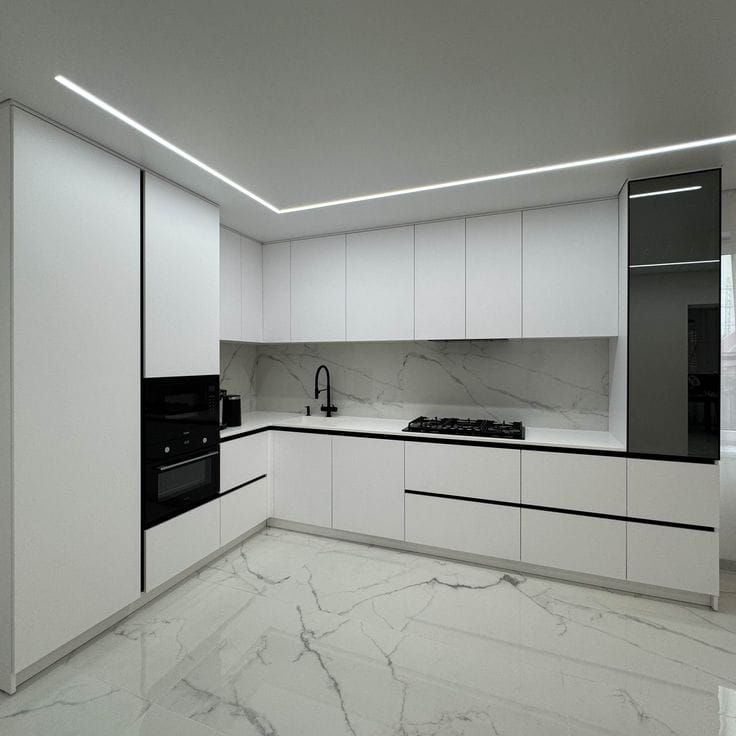
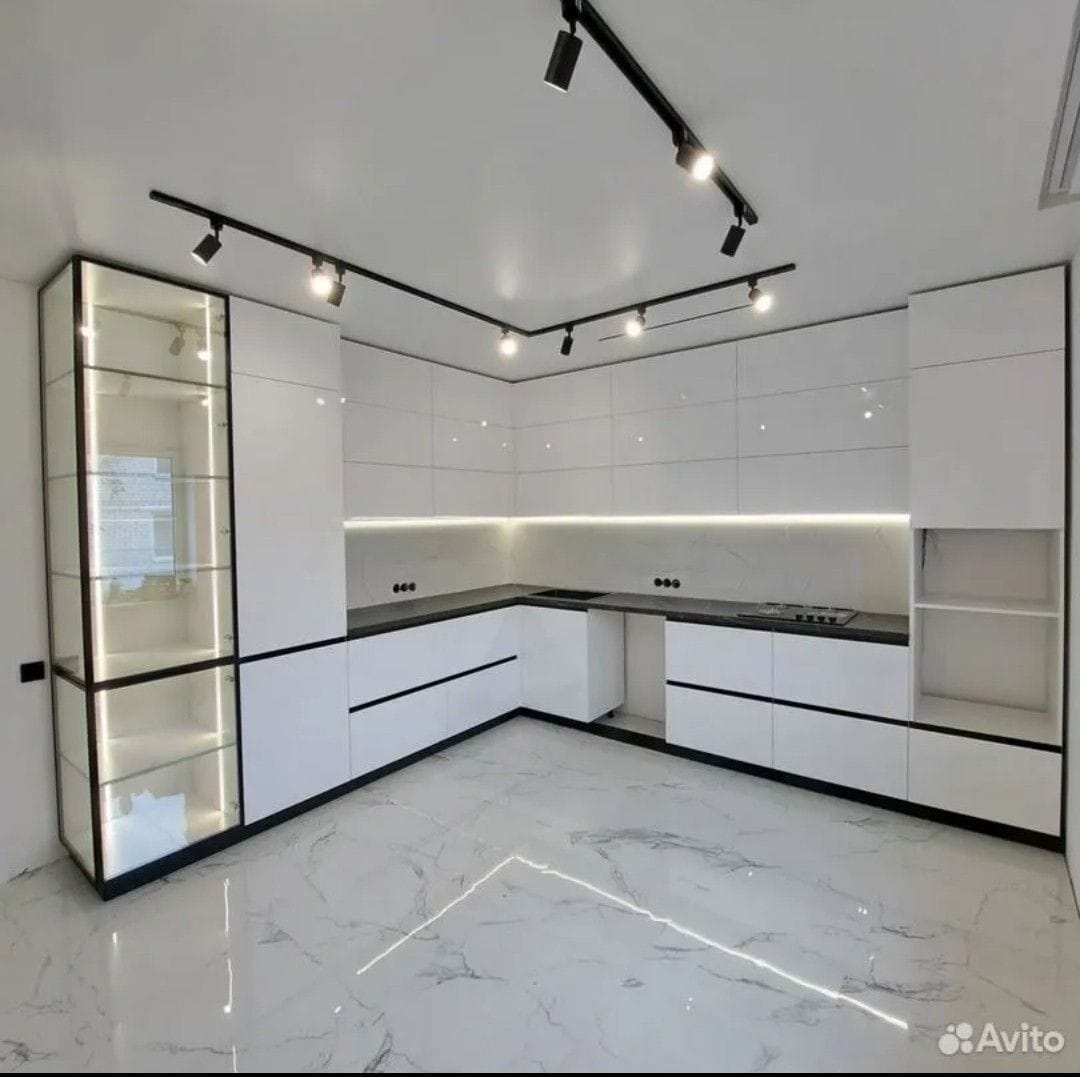
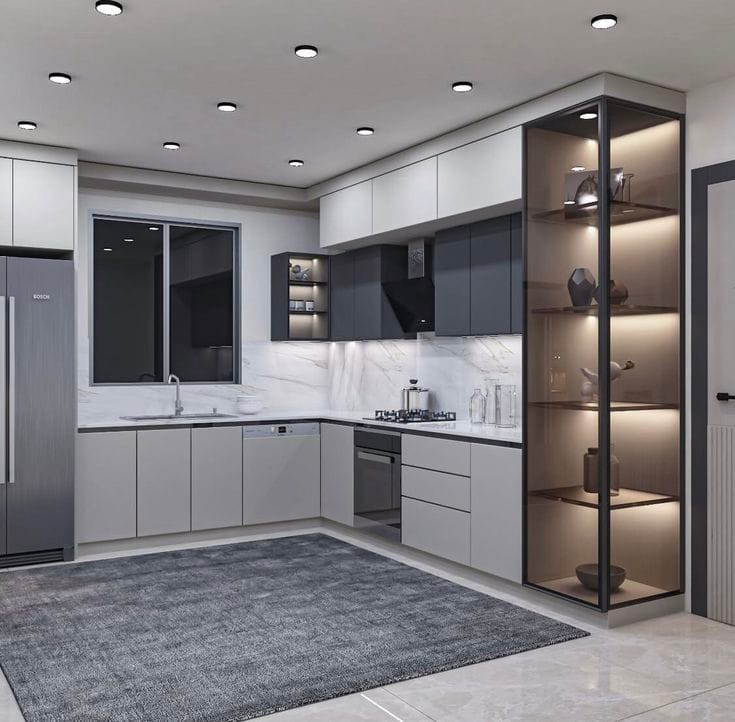
Ask for the full album on WhatsApp and we will send saj kitchens at sizes and budgets close to your own project.
Colours and finishes
The belief that saj means hospital white is thirty years out of date. What we produce today:
- Matte powder-coated solids. White, cream, light grey, cement grey, beige, olive green, navy, graphite, black. Matte is the sensible choice in metal — it hides fingerprints and does not flatten under harsh light.
- Textured and hammered powder finishes. A fine surface texture that hides marks and small imperfections remarkably well. Genuinely the most practical finish in this whole material, and rarely offered.
- Satin metallics. Brushed silver, graphite, champagne. Contemporary and extremely durable.
- Wood-effect transfer. Available, with a narrower range than in aluminium. If a timber look is central to your decision, read the aluminium page before committing.
- Gloss powder coat. Available, but honestly: if you want deep gloss, acrylic is its material, and gloss on metal shows every fingerprint.
- Two-tone schemes. A deeper colour below and a lighter one above is the most effective way to make a saj kitchen look designed rather than installed.
A design tip worth more than any colour choice: saj benefits enormously from one warm element. A timber breakfast bar, an open shelf in oak, or a wood-effect run below a light metal upper stops a metal kitchen from reading as utilitarian. This is the single change that most often turns a saj kitchen from functional into attractive.
Mixing saj with other materials
- Saj base units with acrylic uppers. Metal where the water and the knocks are, gloss at eye level. An excellent, underused combination.
- Saj with a tempered glass splashback. The wall that takes the grease becomes one wipeable surface, and the glass lifts the whole kitchen visually.
- Saj main run with a timber island or bar top. The best value-for-effect decision available in this material.
- Saj service kitchen with a finer main kitchen. Many Saudi homes have both; this is the most rational split of a budget we know.
- Saj sink and hob units inside an otherwise formica kitchen. Metal precisely where board fails, at a small incremental cost.
Where the price differences come from
| Line item | The cheap shortcut | Our specification |
|---|---|---|
| Sheet gauge | Thin, unstated | Stated as a number in the quotation |
| Coating | Spray paint, air dried | Electrostatic powder coat, oven-cured |
| Cut edges | Left bare inside the cabinet | Folded, sealed or coated throughout |
| Profile | Plain only, no option offered | Plain or 5 cm reinforced, with our honest recommendation |
| Internal shelves | Thin board, unfinished edges | Faced board or steel, edges treated |
| Hinges | Generic, not weight-rated | Soft-close, rated for the door weight |
| Drawer runners | Plastic roller | Full-extension telescopic metal |
| Legs and plinth | Timber sitting on the floor | Adjustable plastic legs, raised plinth |
| Oven isolation | Not mentioned | Thermal isolation as standard |
Two rows decide everything here. Cut edges are where saj rusts, and they are invisible at the point of sale — which is exactly why cheap workshops skip them. And a timber plinth resting directly on the floor is the commonest cause of early kitchen failure in Saudi homes: one mopped floor or one small leak and it absorbs water, swells and takes the unit with it. It is particularly absurd in a saj kitchen, where the entire point was to eliminate water damage — and yet we see it constantly. Every unit we build stands on adjustable legs behind a removable plinth.
Compare tables of line items, not final totals. Saj is the category where the cheapest quotation is most often cheap for reasons you cannot see.
Our process — eight steps
- A call or WhatsApp message. City, property type, approximate size, and the budget you have in mind. Free and non-committal.
- The measuring visit. A technician measures the walls, corners, sockets, water and gas points and the extraction position himself. Metal cannot be trimmed on site the way board can, so accuracy here is not optional.
- Free 3D design. You see the colour, the profile choice, the layout and the lighting before you pay anything.
- Revisions. Unlimited at this stage — changing a drawing is free, changing a formed and coated steel door is not.
- An itemised quotation. Gauge, coating process, edge treatment, profile type, hardware, worktop, lead time and warranty.
- Manufacturing in our own factory. Forming and coating both happen in house, which is why we can state the gauge and stand behind the edges.
- Installation by our own crew — the same crew in all four cities.
- Handover and inspection with you. We open and close every door and drawer in front of you, adjust the hinges, and give you the written warranty certificate.
Caring for a saj kitchen
- A damp cloth and mild soap, then dry. Steel does not fear water, so this is easier than with any board-based kitchen.
- No steel wool and no abrasive powders. They will scratch the powder coat — and the coat is what protects the metal from rust. This is the one rule that genuinely matters.
- Repair any chip promptly. If the coating is broken down to bare metal, touch it up. We supply a matched touch-up with every kitchen, and a thirty-second repair prevents a rust spot that spreads for years.
- No chlorine bleach and no acetone. Both can discolour a powder coat locally, and that cannot be undone.
- Wipe grease from the fold lines every few weeks. Formed metal has folds, and folds collect residue people forget about.
- Check the hinges every six months. Metal doors are heavy; a quarter turn keeps the door square and stops the edge rubbing.
- Run the extractor every time you cook. Steam is the enemy of every kitchen; saj tolerates it, but the hardware and adjacent surfaces do not.
With those seven habits a saj kitchen from our factory outlasts its own fashion. The metal does not fail on its own — it fails at a broken coating on a bare edge, and both are preventable.
Common mistakes we see in saj kitchens
- Thin gauge chosen to hit a price. The most expensive saving in this material. It shows as flexing doors, then sagging doors, then doors that never sit flush.
- Bare cut edges inside the cabinets. The single cause of almost every rusted saj kitchen we are called to look at. It is invisible when you buy and obvious three years later.
- Spray paint instead of cured powder coating. It chips at the first knock and rusts at the chip.
- A timber plinth on the floor. Absurd in a metal kitchen, and still common.
- Hinges not rated for the door weight. Steel doors are heavy. Underrated hinges sag, and a sagging door damages the cabinet body it hangs on.
- A cheap laminate worktop under a durable kitchen. The worktop takes knives, heat and standing water. Quartz, granite or stainless steel.
- No thermal isolation beside the oven. Trapped heat damages the adjacent unit and can discolour a coating locally.
- Paying for the 5 cm profile in a service kitchen. We will tell you when the plain profile is enough, because the difference belongs in your pocket rather than in a utility room.
Accessories: heavy doors, serious hardware
A saj kitchen with excellent accessories is more pleasant to live with than a timber kitchen with poor ones — because what you touch every day is the hinge, the runner and the handle, not the panel.
- Soft-close hinges rated for the weight. Non-negotiable in metal. They also prevent the metallic slam that people wrongly assume is inherent to saj.
- Full-extension telescopic runners. You see the back of the drawer. Roller runners open halfway and jam within a year.
- Rotating corner baskets. The corner is the worst space in any kitchen; this one part turns it into real storage.
- In-drawer knife and cutlery organisers. Inexpensive, and they change how the kitchen feels every single day.
- Integrated waste bin and internal laundry basket. They hide the ugliest object in the room.
- LED lighting under the wall units. It turns the worktop from a shadowed strip into a comfortable work surface. Warm white, because cool white on metal reads clinical.
- Recessed grip rails or push-to-open for a clean metal face, priced as a clear line item.
How the price is calculated — the linear metre, unpacked
Kitchens are priced by the linear metre, not the square metre. A linear metre normally covers the base unit, the wall unit above and the worktop. An L-shape with three metres on one wall and two on the other is five linear metres. What those metres cost moves with:
- Plain profile or 5 cm. The largest single swing in this material, and the one we will advise you on honestly.
- Sheet gauge. Heavier steel costs more and lasts longer. This is the one place we do not recommend economising.
- Doors versus drawers. A drawer needs a runner and a box. All drawers can run thirty per cent above all doors at the same length.
- Corners and columns. Special pieces, and ideally a rotating basket.
- A third upper row. More storage and more cost — and ask whether you will reach it without a chair.
- Built-in appliances. Each needs a precise housing, ventilation, and thermal isolation.
- Finish type. Standard powder colours are stocked; textured and metallic finishes are special runs and priced accordingly.
- The worktop. A separate line, and the spread between options can be a third of the kitchen’s cost.
Which is why we refuse to give a final figure by phone before measuring. An indicative range on the phone; a precise itemised figure after the visit. Anyone quoting firmly before seeing your space has priced the weakest specification or intends to raise it later.
What our quotation includes — and what it does not
Included: the measuring visit, 3D design, formed steel bodies and fronts, oven-cured powder coating, treated cut edges throughout, soft-close hinges and telescopic runners, handles, thermal isolation beside the oven, matched touch-up, delivery, installation, post-installation adjustment, and a ten-year written warranty certificate.
Not included — quoted separately, only on request: the worktop, sink and tap, extractor, hob and oven, LED lighting, plumbing and electrical work inside the wall, the wall splashback, and removal or relocation of an old kitchen.
Ask every other quotation for the same breakdown. A “cheaper” offer that excludes delivery and installation is usually the more expensive one once you add them back.
An honest comparison with our other materials
| Material | Durability | Look | Price | Best for |
|---|---|---|---|---|
| Formica | Good with the right spec | Practical, neat | Lowest | Tight budgets and rentals |
| Acrylic + formica | Very good | Partly glossy | Low–medium | Best value for money |
| Saj steel | High | Metallic, modern | Medium | Longest life at the lowest price |
| Aluminium & alumetal | Very high | Modern, versatile | Medium–high | Heat, humidity and heavy use |
| Acrylic | Very good | Deep gloss | High | Kitchens open to the living room |
| Tempered glass | High | The most refined | High | Small spaces and a premium look |
| Natural wood | High with care | Warm, classical | Highest | Villas and classical taste |
There is no best material in the abstract — only the one best suited to your space, your usage and your budget. But note where saj sits: metal durability at a mid-range price. If your priority is that the kitchen simply keeps working for a decade and you are not buying it to impress visitors, nothing else on this list competes with it on that basis.
Saj against aluminium — the comparison people actually want
These are our two metal kitchens, and clients ask us to separate them constantly. The honest breakdown:
- Price. Saj is meaningfully cheaper. This is its main argument.
- Rust. Aluminium does not rust at all, ever. Saj is steel — with intact coating and treated edges it will not rust either, but the possibility exists where aluminium’s does not. If you want the risk eliminated rather than managed, that is aluminium.
- Weight and rigidity. Steel is stronger for a given thickness; aluminium profiles achieve rigidity through their extruded shape. Both work when properly specified.
- Finish range. Aluminium wins clearly, particularly on convincing wood effects and anodised metallics.
- Appearance. Aluminium gives a framed door; saj gives a flatter, simpler face. Which you prefer is taste, not quality.
- Humidity. Both handle it. In Al-Ahsa specifically, if the budget stretches, we recommend aluminium. If it does not, saj with proper coating and folded edges is a sound and honest second choice — not a compromise we are embarrassed by.
Layouts and spaces
- Single run. For narrow rooms and galley spaces. Cheapest to build and simplest to maintain.
- L-shape. The most common layout in Riyadh apartments, giving a comfortable working triangle between sink, hob and fridge.
- U-shape. The highest storage capacity; needs a room width of at least 240 cm to keep circulation comfortable.
- Parallel runs. Excellent for long kitchens, with 110–120 cm of clear floor between them. Saj on one run and a warmer material opposite is a well-balanced combination.
- Island. Needs generous space. In saj we strongly recommend a timber or stone island top — it is the detail that lifts the whole kitchen.
In every case, the free 3D design settles it before anything is formed. We show the two or three layouts genuinely possible in your room, and you choose while looking rather than imagining.
Lead time and warranty
- Measuring and design: two to four days until you approve.
- Manufacturing: ten to sixteen working days. Forming and oven-curing are sequential processes with their own times, and we will not rush the cure — an undercured coat is a rust problem waiting to happen.
- Installation: one to two days for an average kitchen.
The warranty is ten years in writing, covering manufacturing and installation defects, coating adhesion, hinges and runners. It does not cover — and we say this plainly — impact damage and dents, flooding, direct flame, abrasive cleaning, rust arising from a chip left untreated after we handed over the touch-up, or units dismantled and reinstalled by anyone other than us.
Saj in the cities we serve
- Riyadh. Dry, hot and dusty. Saj is entirely at home; the practical challenge is dust, so we recommend textured or matte mid-tone finishes because they hide it far better than gloss.
- Al-Ahsa. High humidity. Here the edge treatment stops being a quality detail and becomes the whole question — we fold and seal every cut edge without exception and specify the heavier gauge. And we say openly that aluminium is the lower-risk choice in this city if the budget allows it.
- Buraydah. Wide seasonal temperature swings. Steel is dimensionally stable across them, unlike timber, which expands and contracts.
- Hail. Colder winters and warmer local taste. Here we most often pair saj with a timber element, because pure metal reads cold against the interiors common in the region.
Across all four: the same crew, the same specification, the same warranty. We do not price Al-Ahsa or Buraydah higher for distance, and we do not thin the specification to absorb transport.
Replace or refurbish?
Saj is an unusual case here, because a steel kitchen can often be recoated rather than replaced:
- Sound bodies, tired or dated colour — the fronts can be stripped and recoated in a new colour. A fraction of a new kitchen, and it is the best-value job we do in this material.
- Surface rust in isolated spots, bodies otherwise solid — treat, recoat, and it continues. Steel is forgiving if you catch it.
- Rust through the sheet, or bodies flexing — replace. Once the metal is perforated there is no honest repair.
- A layout that does not work — replace it. Do not spend money making an irritating arrangement look better.
- Thin-gauge kitchen from a cheap workshop — replace. Recoating thin sheet gives you a nicer-looking kitchen with the same flexing doors.
We inspect what you have during the measuring visit and tell you what we actually think — including, more than once, that recoating is all you need and a new kitchen would be a waste of your money.
For contractors and property projects
Saj is our most recommended material for property portfolios, and the reasoning is straightforward: tenants do not maintain kitchens, and metal does not care.
- Standardise gauge, colour and size across units — one spare front fits any apartment and maintenance is faster and cheaper.
- Specify folded edges even where it costs more. This is the difference between a portfolio kitchen at year eight and a replacement programme at year four.
- Raise every unit on adjustable legs. Water on the floor in a tenanted apartment is expected, not exceptional.
- Choose textured mid-tone powder finishes. They hide marks between tenancies and photograph consistently at every viewing.
- Keep touch-up paint and two spare fronts on site. Both are cheap, and both prevent small damage becoming a unit replacement.
- Ask for project pricing. We price from five units upward with a phased delivery schedule matched to your handover programme.
Questions our clients ask
Does a saj kitchen rust?
Not with an intact oven-cured powder coat and treated cut edges. It rusts where bare steel meets moisture — which is why we fold and seal every cut edge, and why we hand over matched touch-up so a chip never becomes a rust spot. Every rusted saj kitchen we have been called to inspect had bare edges inside the cabinets.
Is saj noisy?
Not with soft-close hinges. The metallic clack people associate with saj comes from doors striking the body directly, which soft-close prevents entirely. With cheap hardware, yes — which is an additional reason not to economise there.
Is the 5 cm profile worth the extra?
In a main kitchen used daily, yes — it holds its shape better over ten years and feels substantially better in the hand. In a service kitchen or a rental unit, no, and we will tell you so.
Does saj get hot next to the oven?
Metal conducts heat more than board, but units beside a built-in oven are thermally isolated in any properly built kitchen of any material. We do this as standard.
Can I have a wood look in saj?
Yes, but the range is narrower than in aluminium. If the timber appearance matters a great deal to you alongside metal durability, wood-effect aluminium is our recommendation.
Can the colour be changed later?
Yes — and this is a real advantage of steel that almost nobody knows. The fronts can be stripped and recoated in a different colour years later, keeping the bodies. No board-based kitchen offers this.
Does the price include the worktop?
No. It is a separate, clearly stated line because the options vary so widely. We never fold it silently into a total.
Can I extend the kitchen later?
Yes. We keep your kitchen’s specification on file — gauge, coating and colour reference — so an additional unit years later matches instead of looking like a foreign object.
Is payment in stages possible?
Yes, tied to the stages of work and set out in the quotation.
Why Modern Palace
- A factory, not a showroom. We form and coat in house, which is why we can state the gauge in writing and stand behind every cut edge.
- We supply our own materials — we know the origin of every sheet and choose its specification rather than buying whatever is available.
- More than 5,000 kitchens delivered since 2015, and more than 15,000 clients.
- One installation crew across four cities — Riyadh, Al-Ahsa, Buraydah and Hail.
- A ten-year written warranty on saj exactly as on our most expensive materials. We do not tier the warranty by price.
- Free 3D design before any financial commitment.
And we will say what others avoid: if saj is not right for you, we will tell you — including when the plain profile is enough and you do not need the 5 cm. We are planning for ten years with you, not for one invoice.
Other materials that might suit you
- Aluminium & alumetal kitchens — metal with zero rust risk and a wider finish range.
- Acrylic & formica kitchens — if appearance matters more than maximum life.
- Formica kitchens · Acrylic kitchens · Glass kitchens · Natural wood kitchens
In summary
Saj is the most undervalued material in the Saudi kitchen market: metal durability, no swelling, no rot, at a mid-range price — and it can be recoated a decade later instead of replaced. Its reputation comes from thin sheet, spray paint and bare cut edges, none of which are properties of steel. Get four things right — stated gauge, oven-cured powder coating, treated cut edges, and hinges rated for the weight — and this will be the kitchen you stop thinking about, which is the highest compliment a kitchen can earn.
Request a free 3D design for your saj kitchen
Free measuring in Riyadh, Al-Ahsa, Buraydah and Hail, an itemised quotation stating gauge and coating — and a ten-year written warranty.