Natural wood is the most expensive material we make, and the only one we will actively talk some clients out of. Not because it is a poor choice — it is the most beautiful kitchen we build — but because wood is the one material that asks something of its owner in return. If you want a kitchen that demands nothing from you, this is not the page for you, and we would rather say that in the first paragraph than in a warranty dispute three years from now.
We manufacture natural wood kitchens in our own Riyadh factory and install them with our own crew in Riyadh, Al-Ahsa, Buraydah and Hail, with a written ten-year warranty.
What “natural wood” actually means — and the trick to watch for
This is where most of the deception in the Saudi kitchen market lives. Four very different things are all sold under the word “wood”:
- Solid timber. Real planks, jointed. Beech, oak, ash, walnut. The genuine article, and the only one we call a natural wood kitchen.
- Engineered / laminated solid. Strips of real timber glued into stable panels. Real wood throughout, and in some respects more stable than a single wide plank because the grain directions are balanced against each other. Entirely legitimate and often the smarter engineering choice.
- Veneer. A thin layer of real wood over MDF. It looks like wood because it is wood on the surface — but it cannot be sanded and refinished more than once, and a deep gouge reaches the board.
- Wood-effect print. Not wood at all. A printed pattern on laminate or foil. Legitimate as a product — see formica and aluminium, where we use it deliberately and say so — but it is not a wood kitchen and it should never be priced as one.
The check is simple and takes five seconds: look at the edge of a door and at the end grain. In solid timber the grain runs continuously round the edge and the end grain is visible as a different texture. In veneer the face pattern stops abruptly at a glued edge strip. In print, the same pattern repeats identically on multiple doors.
Ask for the species and the construction in writing. “Wood” in a quotation means nothing. “Solid beech, laminated panel construction, 20 mm” means something.
The species we work with
- Beech. Dense, fine, pale, very consistent. Takes stain beautifully, which makes it the most flexible species for matching an existing interior. Our most common recommendation for a first solid-wood kitchen.
- Oak. The classic. Open, pronounced grain and genuinely hard — the most forgiving species in a busy family kitchen. Available in light natural tones or fumed darker.
- Ash. Similar strength to oak with a lighter, straighter grain. Excellent if you want the durability of oak in a more contemporary, less rustic look.
- Walnut. The luxury choice. Deep chocolate tones with dramatic figure. Expensive, and worth it only if the kitchen is genuinely on show, because its beauty is the entire argument for it.
We will tell you honestly which species suits your room’s light. Dark walnut in a small kitchen with one window is a decision people regret, and we would rather lose the upsell than watch that happen.
Why wood, in one honest paragraph
Everything else we build is manufactured to look a certain way. Wood simply is. No two doors are identical, the grain carries depth that no print achieves, and it ages into something rather than away from something. And there is one purely practical advantage no other material can offer: solid wood can be sanded and refinished. A scratch in acrylic is permanent; a scratch in laminate is permanent; a scratch in solid oak is a twenty-minute job. A solid timber kitchen can be brought back to new twice or three times over its life. That is why old wooden kitchens survive and old laminate kitchens go to the skip.
Who should choose wood — and who should not
We recommend it if:
- You are furnishing a villa or a home you intend to keep for a long time.
- Your taste runs classical, traditional or warm-contemporary rather than minimal.
- You value a material that can be repaired and refinished rather than replaced.
- The kitchen is well ventilated and has a working extractor — this matters more for wood than for anything else.
- You are prepared to do a small amount of maintenance every few years. Genuinely small, but not zero.
We do not recommend it if:
- You are in Al-Ahsa and the kitchen is heavily used. High humidity is wood’s one true adversary. We do build wood kitchens in Al-Ahsa and they work — but we specify differently, and we tell clients honestly that aluminium is the lower-risk choice there.
- You want zero maintenance. Wood is not high-maintenance, but it is not no-maintenance.
- You want gloss. Wood is matte or satin by nature; for deep gloss see acrylic or tempered glass.
- Your budget is tight. A well-specified formica kitchen with a convincing wood finish is a far better use of a limited budget than thin veneer sold as solid.
And the drawbacks? Four, stated plainly
- Wood moves. It expands and contracts with humidity — always, in every country, in every price bracket. Well-made joinery accommodates this by design: floating panels in frames, expansion allowance at fixings, and properly sealed end grain. Badly made joinery cracks. This is a workmanship issue, not a defect in the material, and it is the main reason we do not subcontract wood.
- It needs sealing, and resealing. The finish is what protects the timber. Every few years the high-wear areas want attention. We hand over a care sheet and we will come and do it for you if you prefer.
- It is our most expensive material. Considerably more than formica and above glass. If the budget is the binding constraint, wood is the wrong place to compromise, because cheap “wood” is almost always something else wearing wood’s name.
- It is vulnerable at the sink. The cabinet under the sink is the highest-risk unit in a wooden kitchen. We treat it as a special case — sealed end grain, a drip tray in the base, and a moisture-resistant carcass regardless of what the doors are.
How to tell real wood — and good joinery — from bad: eight checks
- Look at the end grain on a door edge. Solid timber shows end grain as a different texture with the grain running continuously round the corner. Veneer shows a glued edge strip where the pattern stops.
- Compare two doors side by side. Real wood is never identical twice. If the figure repeats exactly, you are looking at print.
- Ask for the species by name. Beech, oak, ash, walnut. “Wood” as an answer is not an answer.
- Ask how the panel sits in the frame. In good joinery a panel floats — it is free to move a millimetre or two within its groove. A panel glued rigidly on all four sides will crack, guaranteed, because the timber will move whether the maker allowed for it or not.
- Check the corner joints. Mortise-and-tenon or a properly cut dowelled joint. Two screws through a mitre is furniture-shop work, not kitchen joinery.
- Ask what the finish is and how many coats. Lacquer, oil or a two-pack polyurethane are all legitimate, and each behaves differently. “Varnish” with no further detail is a warning sign.
- Ask specifically about the sink cabinet. If the answer does not mention sealing or moisture-resistant board, the supplier has not thought about the one unit most likely to fail.
- Ask about the carcass. Even in a solid-wood kitchen the carcasses are normally board, and that is correct engineering. What matters is that it is MDF/HDF and moisture-resistant where water lives — not ordinary particle board.
Do these checks with us as readily as with anyone else. We are not asking for trust — we are asking you to compare specifications.
Wooden kitchens we built ourselves
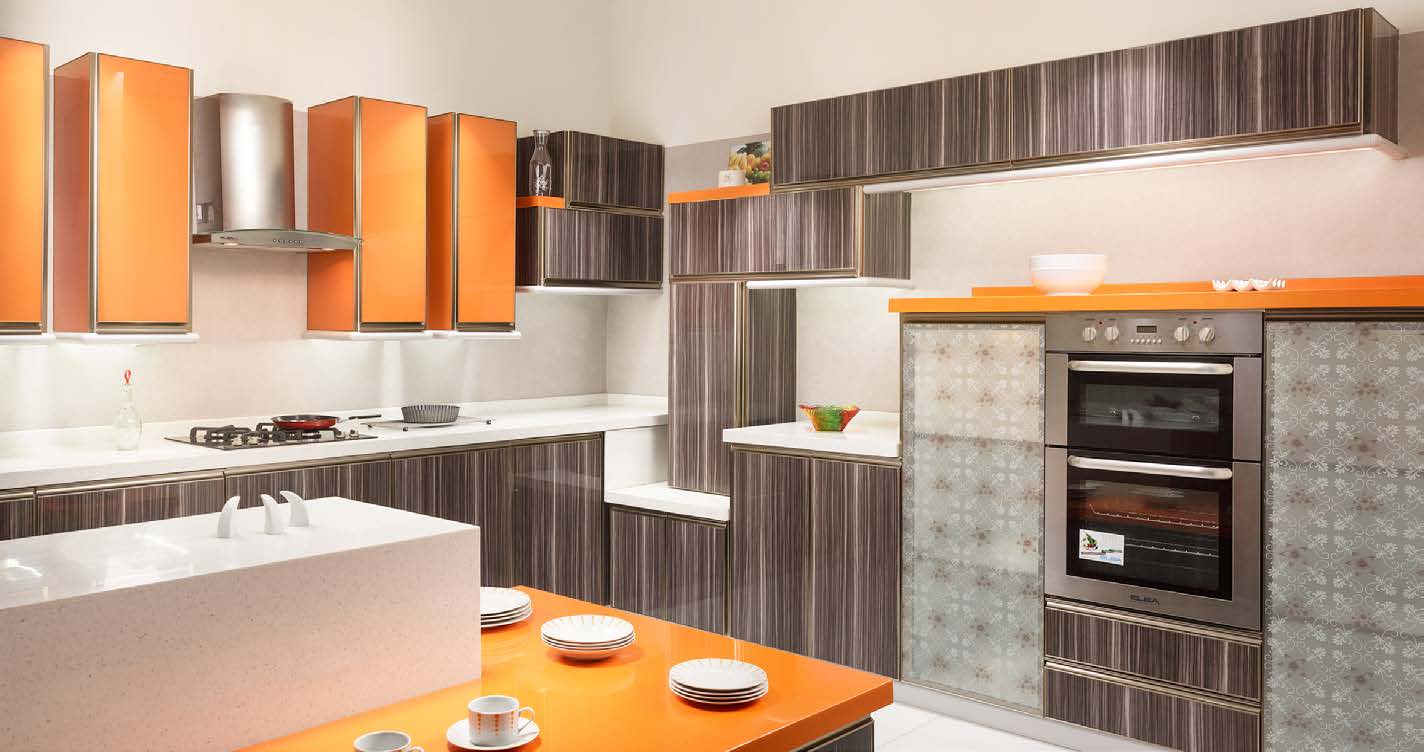
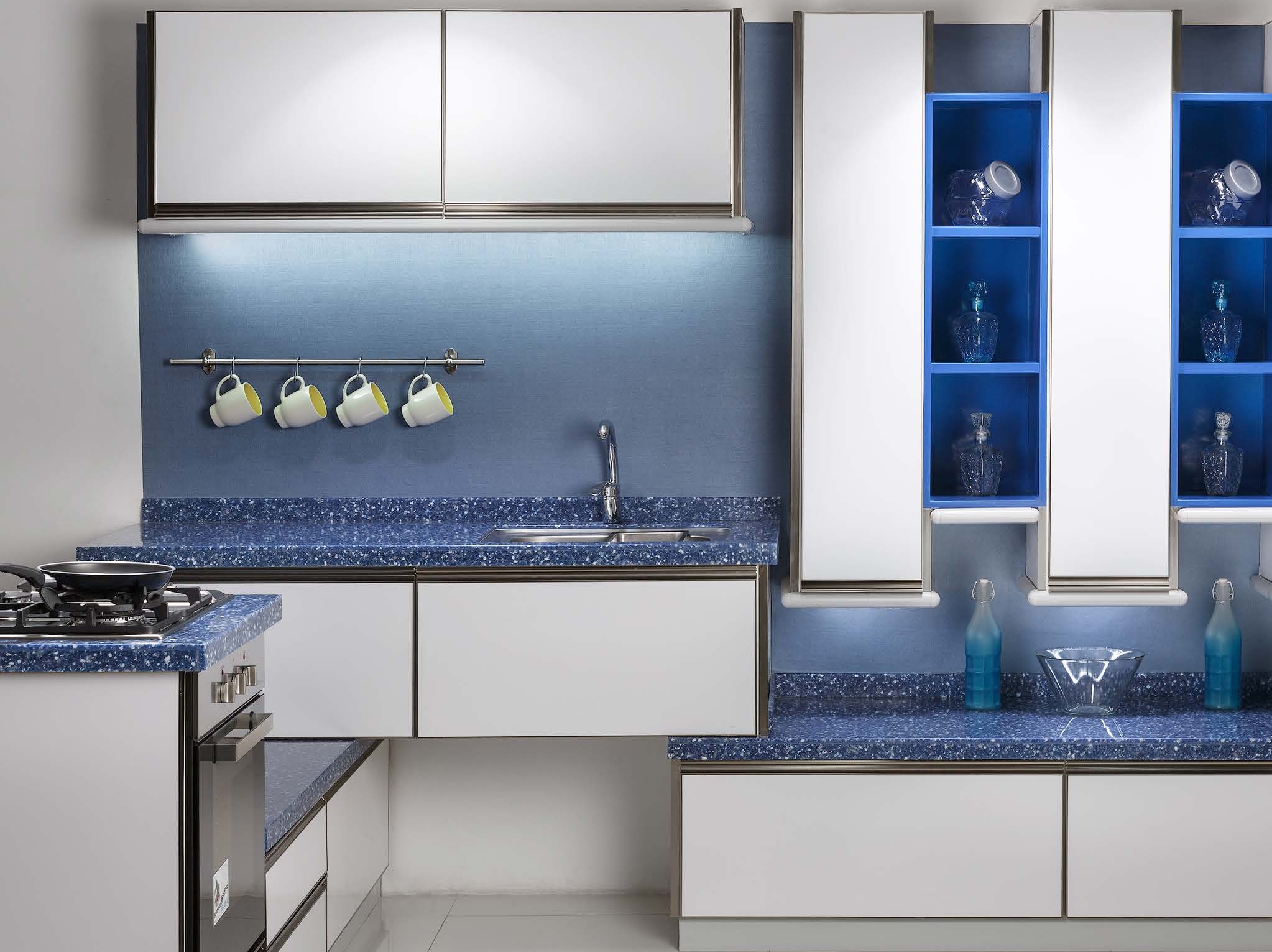
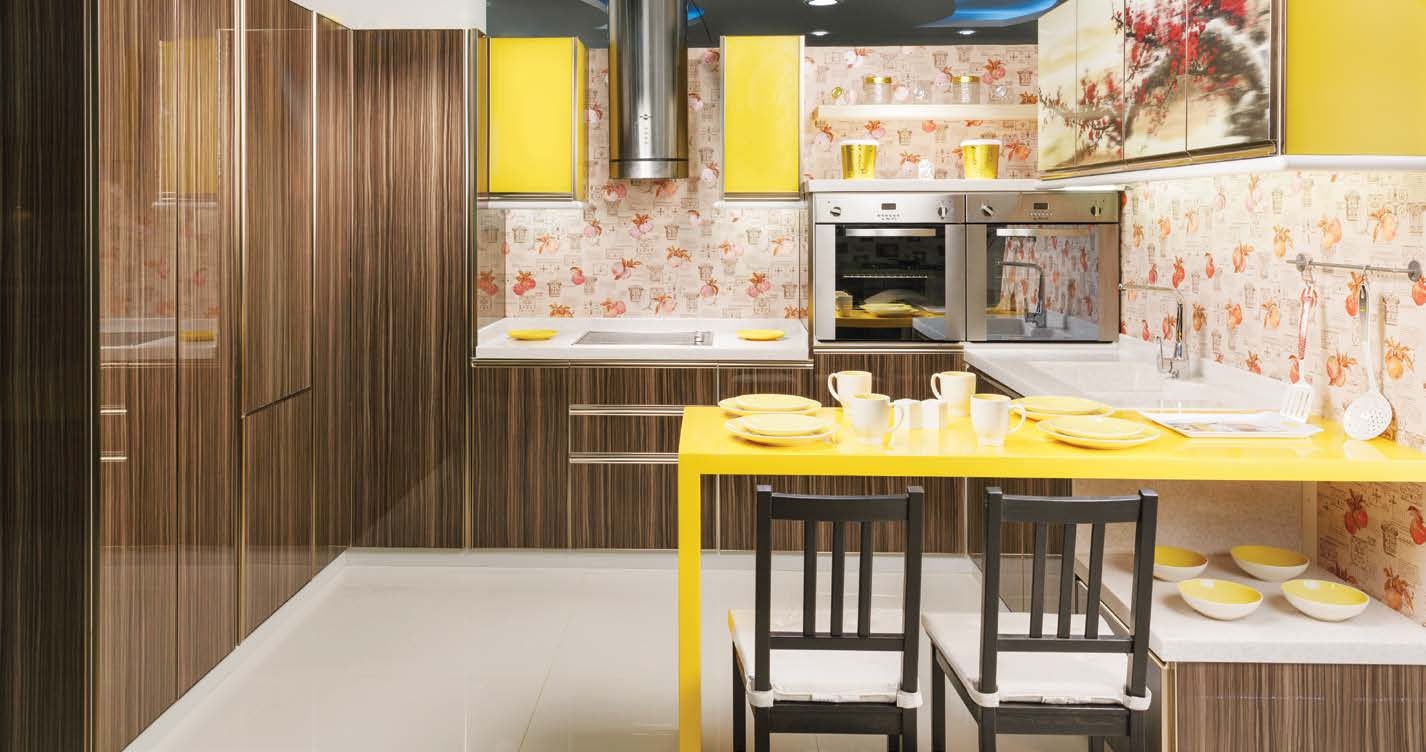
Not stock photography. Every image below is a solid wood kitchen that left our Riyadh factory and was installed in a client’s home — judge the joinery, not the adjectives.
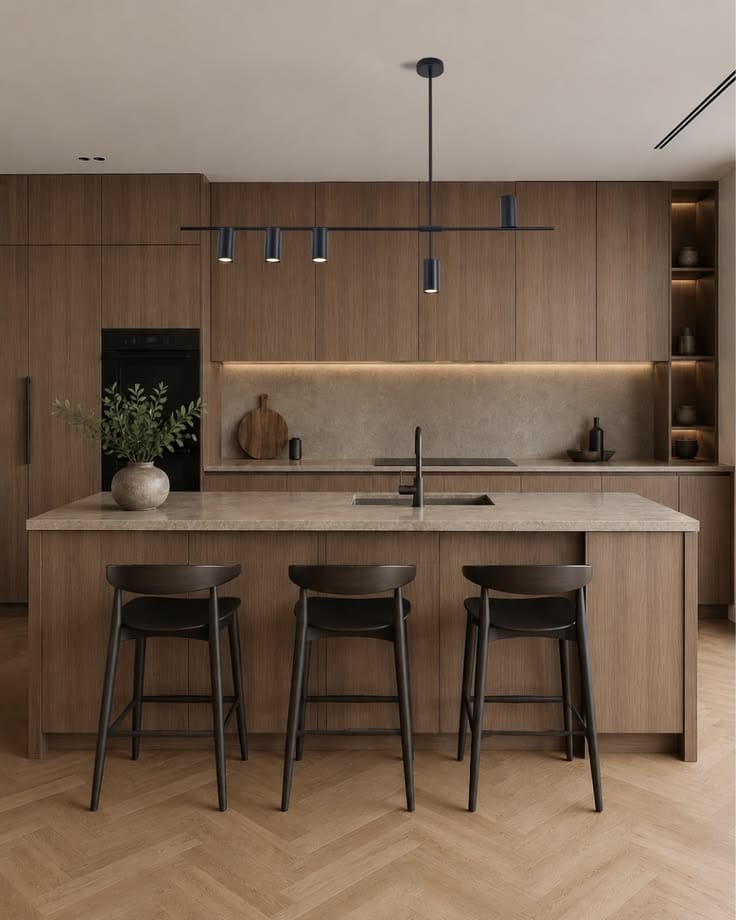
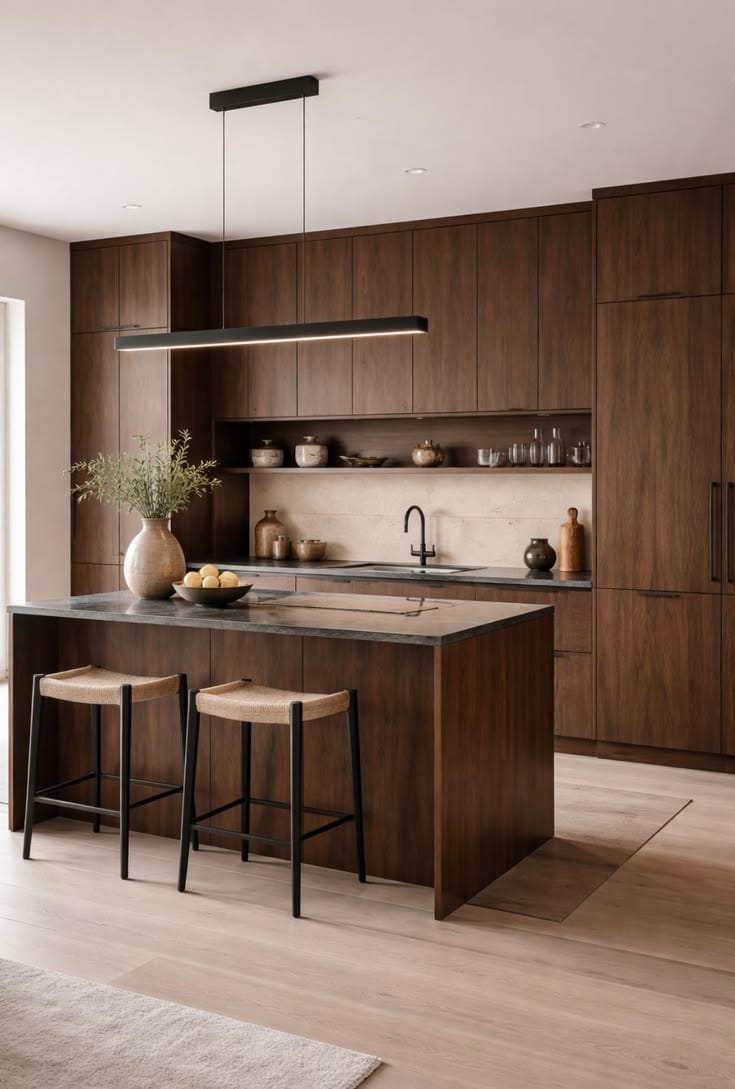
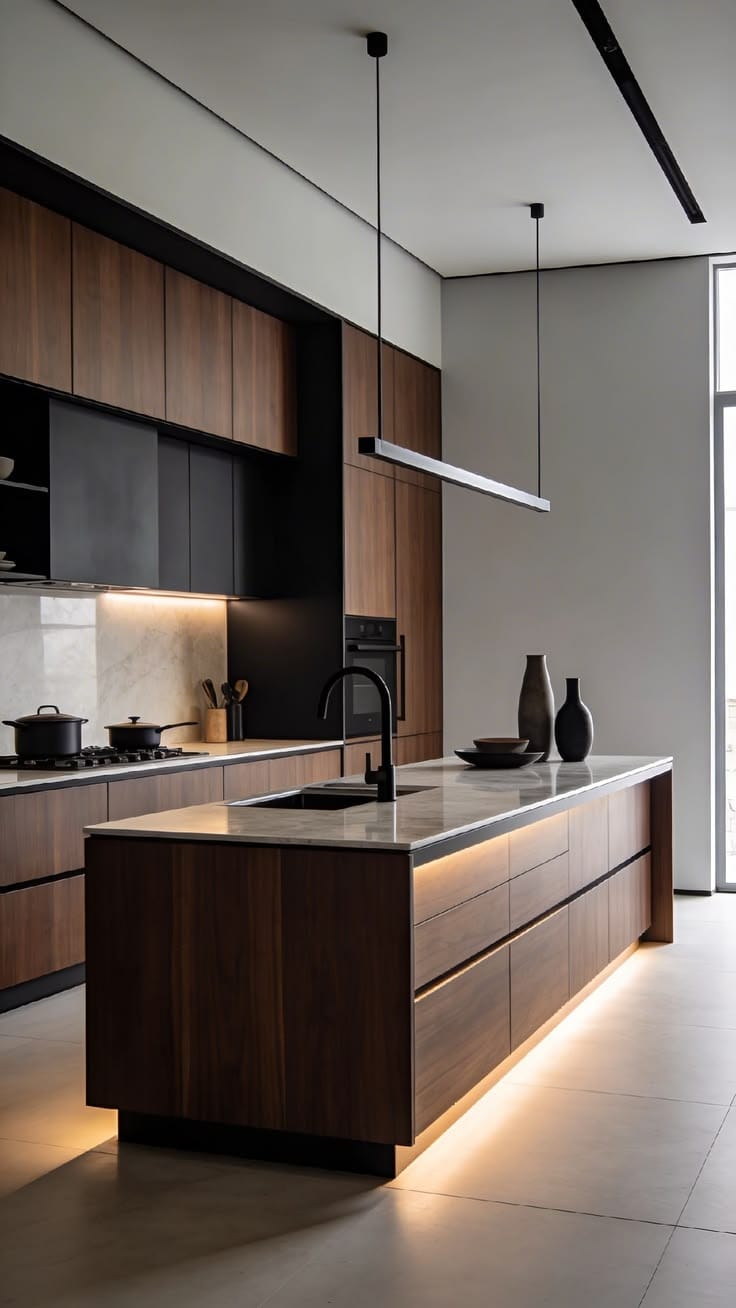
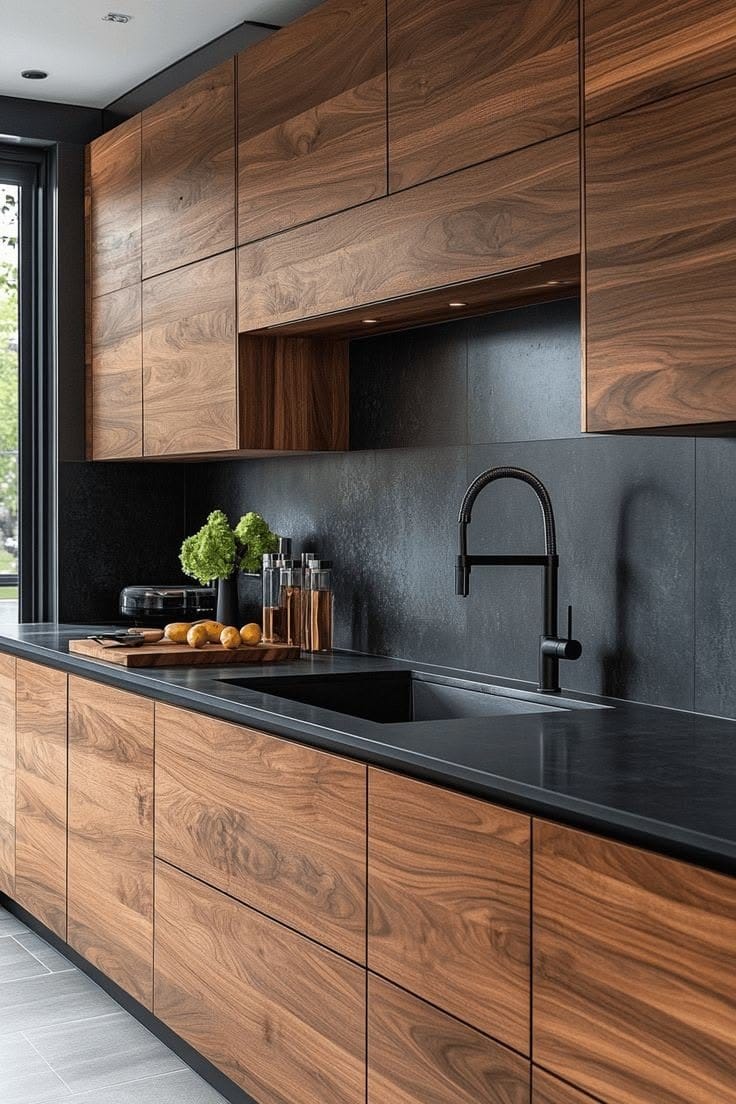
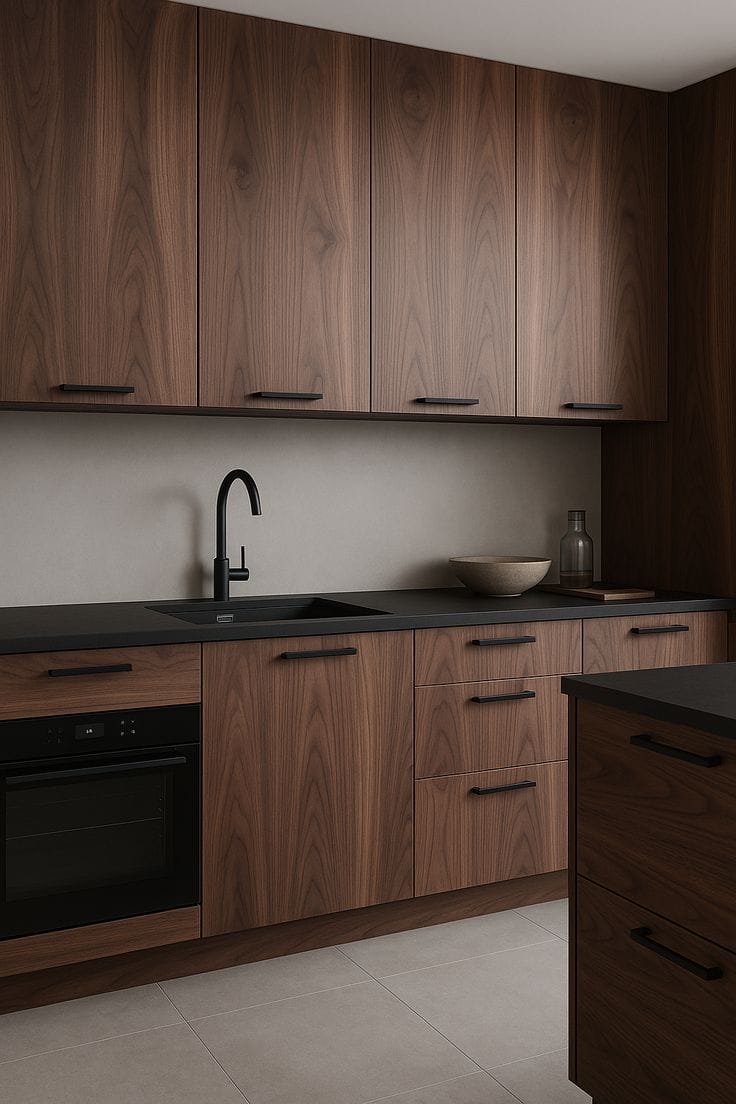
Ask for the full album on WhatsApp and we will send wooden kitchens at sizes and budgets close to your own project.
Finishes, tones and door styles
Wood is the only material where the finish changes the character as much as the colour:
- Clear satin lacquer. Shows the timber as it is. Our default recommendation, and the easiest to maintain.
- Stained. Beech and ash take stain exceptionally well, so you can match an existing floor or an existing set of doors closely.
- Oiled. The most tactile finish — you feel the grain. It needs reoiling more often but it repairs invisibly, which is a real advantage in a busy kitchen.
- Two-pack polyurethane. The toughest and the most water-resistant. Our choice for wooden kitchens in Al-Ahsa and for any sink run.
- Painted solid wood. Often overlooked: a painted shaker door in solid timber gives you the joinery quality of wood with the colour freedom of paint, and it can be repainted a decade later. Excellent value in the wood category.
- Limed or white-washed. Grain visible through a pale wash. Suits bright, coastal-modern interiors.
On door styles: shaker (a flat panel in a simple frame) is the most versatile and reads as neither dated nor trend-chasing; raised panel is fully classical; flat slab in solid timber is contemporary and shows the grain best but is the least forgiving of movement, so it needs the best joinery.
A design note worth saying: wood does not want to be the only thing in the room. Timber doors with a stone worktop and a glass splashback is a combination that works everywhere; timber on every surface reads heavy.
Mixing wood with other materials
- Wood uppers with aluminium lowers. Warmth at eye level, metal where water and knocks are. This is our standard recommendation for clients in Al-Ahsa who want wood.
- Wood doors with a tempered glass splashback. The one surface that takes the most grease becomes the easiest to wipe, and glass keeps water off the timber behind the worktop.
- Solid wood island with painted units elsewhere. A walnut or oak island against quiet painted cabinetry is the most effective use of a wood budget we know.
- Wood main kitchen, formica service kitchen. Many Saudi homes have both. Spend the wood budget where guests see it.
- Wood with an acrylic and formica run in a secondary area — a sensible way to extend a long kitchen without extending the whole budget.
Where the price differences come from
| Line item | The cheap shortcut | Our specification |
|---|---|---|
| What “wood” means | Veneer or print, sold as solid | Species and construction stated in writing |
| Door thickness | 16–18 mm | 20 mm and above for solid doors |
| Panel mounting | Glued rigid on four sides | Floating panel in a grooved frame |
| Corner joints | Mitre and screws | Mortise-and-tenon or cut dowel joints |
| Finish | One coat of unspecified varnish | Multi-coat lacquer, oil, or two-pack polyurethane |
| End grain sealing | Not sealed | Sealed on every cut edge, sink run especially |
| Carcass board | Ordinary particle board | MDF/HDF, moisture-resistant in all wet zones |
| Hinges | Generic, not weight-rated | Soft-close rated for solid-timber door weight |
| Drawer runners | Plastic roller | Full-extension telescopic metal |
| Legs and plinth | Timber sitting on the floor | Adjustable legs, raised plinth |
That last row is not a small detail. A timber plinth resting directly on the floor is the single commonest cause of early kitchen failure in Saudi homes — and in a wooden kitchen it is worse, because the plinth is the same material as everything else and there is no visual warning until it has swollen. Every unit we build sits on adjustable plastic legs behind a removable plinth.
Compare tables of line items, not final totals. Wood is the category where an itemised quotation protects you most, because this is where “wood” gets quietly substituted for wood.
Our process — eight steps
- A call or WhatsApp message. City, property type, approximate size, and the budget you have in mind. Free and non-committal.
- The measuring visit. A technician measures walls, corners, sockets, water and gas points and the extraction position himself — and in a wooden kitchen he also assesses ventilation and humidity, because both change what we specify.
- Free 3D design plus physical timber samples in the finish you are considering. Wood must be seen in your own light, not on a screen.
- Revisions. Unlimited at this stage. Changing a drawing is free; changing a jointed door is not.
- An itemised quotation. Species, construction, thickness, finish system, hardware, worktop, lead time and warranty.
- Manufacturing in our own factory. Wood is the material where workmanship matters most, which is exactly why we never subcontract it.
- Installation by our own crew across all four cities.
- Handover and inspection with you, a written care sheet, and the ten-year warranty certificate.
Caring for a wooden kitchen — the real routine
People imagine this is onerous. It is not. It is simply different from wiping down laminate:
- Damp cloth, then dry immediately. Never leave standing water on timber, and never let it sit in a corner overnight.
- No steel wool, no abrasive powder, no bleach, no acetone. All four attack the finish, and the finish is the only thing between water and the wood.
- Wipe spills as they happen, not later. Sealed wood gives you minutes, not hours.
- Use the extractor every time you cook. This is not optional advice in a wooden kitchen. Steam is what wood dislikes most, and extraction is the cheapest protection there is.
- Reseal or reoil the high-wear areas every two to four years. That means the sink run and the doors beside the hob, not the whole kitchen. It is a morning’s work, and we will do it for you if you would rather not.
- Deal with a scratch by sanding it, not hiding it. This is wood’s privilege. Light sand, matching finish, done — invisible. No other material we build allows this.
- Check hinges every six months. Solid doors are heavy; a quarter turn keeps them hanging square and stops the door edge rubbing.
Do this and a solid wood kitchen outlives every other material we make. Skip the extraction and leave water standing, and it will be the first to complain. The material is honest about what it needs.
Common mistakes we see in wooden kitchens
- Buying veneer or print believing it is solid. The most expensive mistake in this category, and the most common. Ask for species and construction in writing.
- A rigidly glued panel. It will crack. Not “might” — will. Timber moves, and joinery either allows for it or fails.
- No moisture-resistant carcass under the sink. Because the doors are solid wood, people assume the whole unit is immune. The carcass is board, and board under a sink needs to be the right board.
- A worktop chosen last and cheaply. Wood doors with a poor worktop looks wrong and performs worse. Quartz, granite or solid surface — and if you want a timber worktop, understand it is a maintenance commitment of a different order.
- Dark walnut in a small, single-window kitchen. Beautiful in the showroom, oppressive at home. We will say so during the design stage.
- No extraction, or an extractor that vents into the room. A recirculating extractor filters odour but returns the moisture. In a wooden kitchen, vent outside.
- Upper cabinets running to the ceiling for no reason. A shelf you cannot reach without a chair is seasonal storage. Decide that before the design.
Accessories: heavier doors, better hardware
Solid timber doors are the heaviest we hang. Hardware here is structural, not a comfort upgrade.
- Soft-close hinges rated for solid-door weight. Non-negotiable. Underrated hinges sag within a year, and a sagging solid door will damage the frame it hangs on.
- Full-extension telescopic runners. You see the back of the drawer. Roller runners open halfway and jam.
- Solid timber drawer boxes if the budget allows. Dovetailed timber drawer boxes are the detail that separates a joiner’s kitchen from an assembler’s, and they last decades.
- Rotating corner baskets. The corner is the worst space in any kitchen; this part makes it real storage.
- In-drawer knife and cutlery organisers. Inexpensive, and they change the daily feel of the kitchen.
- LED lighting under the wall units. Warm-white LED specifically — cool white makes timber look grey and kills the reason you chose wood.
- Integrated waste bin. Hides the ugliest object in the room.
How the price is calculated — the linear metre, unpacked
Kitchens are priced by the linear metre, not the square metre. A linear metre normally covers the base unit, the wall unit above and the worktop. An L-shape with three metres on one wall and two on the other is five linear metres. What those metres cost moves with:
- The species. Walnut against beech is the largest single swing in this category — a multiple, not a percentage.
- Door style. A raised-panel classical door contains far more machining time than a flat slab, and labour is most of the cost in solid wood.
- Doors versus drawers. A drawer needs a runner and a box; in solid timber with dovetailed boxes the gap widens further.
- Corners and columns. Special pieces, and ideally a rotating basket.
- The finish system. Two-pack polyurethane costs more than a single lacquer and is worth it near water.
- Built-in appliances. Each needs a precise housing, ventilation, and thermal isolation beside the oven.
- The worktop. A separate line, and the spread between options can be a third of the kitchen’s cost.
Which is why we will not quote a final figure by phone. An indicative range on the phone; a precise itemised figure after measuring. Anyone quoting firmly before seeing your space has either priced the weakest specification or intends to raise it later.
What our quotation includes — and what it does not
Included: the measuring visit, 3D design, timber samples, carcasses and solid doors, the full finish system, sealed end grain, soft-close hinges and telescopic runners, handles, thermal isolation beside the oven, delivery, installation, post-installation adjustment, a written care sheet, and a ten-year written warranty certificate.
Not included — quoted separately, only on request: the worktop, sink and tap, extractor, hob and oven, LED lighting, plumbing and electrical work inside the wall, the wall splashback, and removal or relocation of an old kitchen.
Ask every other quotation for the same breakdown. A “cheaper” offer that excludes delivery and installation is usually the more expensive one once you add them back.
An honest comparison with our other materials
| Material | Look | Durability | Maintenance | Price |
|---|---|---|---|---|
| Formica | Practical, neat | Good with the right spec | Minimal | Lowest |
| Acrylic + formica | Partly glossy | Very good | Minimal | Low–medium |
| Saj steel | Metallic, modern | High | Minimal | Medium |
| Aluminium & alumetal | Modern, versatile | Very high | Minimal | Medium–high |
| Acrylic | Deep gloss | Very good | Low | High |
| Tempered glass | The most refined | High | Low | High |
| Natural wood | Warm, classical, unique | Highest with care — and refinishable | Periodic | Highest |
There is no best material in the abstract — only the one best suited to your space, your usage and your budget. Wood is the only one on that list that can be brought back to new twice. It is also the only one that will notice if you ignore it.
Layouts and spaces
- Single run. For narrow rooms. In wood, keep the finish pale here — a dark single run in a narrow galley closes the space in.
- L-shape. The most common layout in Riyadh apartments, giving a comfortable triangle between sink, hob and fridge.
- U-shape. Maximum storage, and where classical timber joinery looks most at home. Needs at least 240 cm of room width.
- Parallel runs. Good for long kitchens, with 110–120 cm of clear floor between. Timber on one run and a painted or aluminium run opposite is a well-balanced combination.
- Island. The single best place to spend a wood budget. A solid oak or walnut island in an otherwise quiet kitchen delivers more visual return than timber everywhere.
In every case, the free 3D design and physical samples settle it before anything is cut. We show the two or three layouts genuinely possible in your room, with real timber in your own daylight.
Lead time and warranty
- Measuring and design: three to five days, because we want you to live with the samples for a day or two.
- Manufacturing: eighteen to twenty-eight working days. Wood is our longest lead time and we will not shorten it — machining, assembly and multi-coat finishing each need their own time, and rushing the finish is how wooden kitchens fail.
- Installation: two to three days for an average kitchen.
The warranty is ten years in writing, covering manufacturing and installation defects, joinery, hinges and runners. It does not cover flooding or standing water, direct flame, abrasive cleaning, failure to maintain the finish as set out in the care sheet, or units dismantled and reinstalled by anyone other than us. We say all of that before you pay, not after.
Wood in the cities we serve
- Riyadh. Dry heat is wood’s easiest climate — low humidity means minimal movement. The one thing to watch is direct sun on a timber door through a west window, which will lighten it over years. We advise a UV-stable finish where sun reaches the units.
- Al-Ahsa. High humidity, and wood’s one real adversary. We do build here, with two-pack polyurethane throughout, sealed end grain everywhere, moisture-resistant carcasses and raised plinths without exception. But we say it plainly: if the kitchen is heavily used, aluminium is the lower-risk choice, and we would rather you knew that.
- Buraydah. Wide seasonal swings, which means more movement across the year than in Riyadh. Floating panels and correct expansion allowance matter most here — which is exactly why joinery quality, not species, is the thing to ask about.
- Hail. Colder winters and warmer local taste. Wood is the most requested material we deliver here, and oak in natural or fumed tones suits the preference well.
Across all four: the same crew, the same specification, the same warranty. We do not price Al-Ahsa or Buraydah higher for distance, and we do not thin the specification to absorb transport.
Replace or refurbish?
Wood is the one material where refurbishment is frequently the right answer, because timber can be brought back rather than replaced:
- Solid doors, tired finish — sand and refinish. Your kitchen comes back looking new for a small fraction of a replacement, and this is the single best-value job we do.
- Solid doors, sound carcasses, dated style — refinish in a different tone, or repaint if they are painted solid wood. A dark 2010s kitchen becomes a pale 2026 one in days.
- Swollen plinths or units that move — replace the carcasses and keep the doors if the doors are genuinely solid. We do this regularly.
- Veneer that has been damaged through — replacement. Veneer cannot be sanded back more than once, and a patch will always show.
- A layout that does not work — replace it. Do not refinish an arrangement that irritates you daily.
We inspect what you have during the measuring visit and tell you what we actually think — including, more than once, that refinishing is all you need and a new kitchen would be a waste of your money.
For contractors and property projects
- Wood is rarely the right choice for rentals. We will say this even though it costs us the larger order. Tenants do not maintain finishes, and an unmaintained wooden kitchen deteriorates faster than an unmaintained laminate one. For rental stock, specify formica, aluminium or acrylic and formica.
- Wood is the right choice for villas built to sell at the top of the market, where the kitchen is part of the sales argument.
- Consider painted solid wood for projects. It gives genuine joinery quality with a surface that can be repainted between tenancies.
- Standardise species and finish across units so touch-ups and spares match years later.
- Ask for project pricing. We price from five units upward with phased delivery matched to your handover programme.
Questions our clients ask
Will a wooden kitchen survive the Saudi climate?
In Riyadh, Buraydah and Hail — yes, comfortably, and dry heat is easier on timber than the damp climates wood is traditionally associated with. In Al-Ahsa it needs a specific specification and an owner who runs the extractor. We will tell you which category your kitchen falls into after we see the room.
Will it crack?
Well-made joinery does not crack, because it is designed around the fact that timber moves. Rigidly glued panels crack. This is why we ask you to check how the panel sits in the frame, and why we never subcontract wood.
How often does it need maintenance?
Realistically, attention to the sink run and the hob doors every two to four years. Not the whole kitchen, and not every year. We hand over a care sheet, and we will do the work for you if you prefer.
Is engineered solid wood inferior to a single plank?
No — often the opposite. Balanced laminated panels are more dimensionally stable than a wide single board. It is real wood throughout, and choosing it is an engineering decision rather than a compromise.
Can I get a wooden look for less money?
Yes, honestly. Wood-effect formica or thermal-transfer aluminium will give you the appearance at a fraction of the cost, and we will tell you it is not wood rather than let you assume otherwise. What you give up is the grain’s depth and the ability to refinish.
Does the price include the worktop?
No. It is a separate, clearly stated line because the options vary so widely. We never fold it silently into a total.
Can I extend the kitchen later?
Yes, though be aware that timber from a new batch will not match an aged kitchen exactly — wood darkens with light. We keep your species, stain reference and finish system on file and will match as closely as the material allows, and we will tell you honestly how close that is.
Is payment in stages possible?
Yes, tied to the stages of work and set out in the quotation.
Why Modern Palace
- A factory, not a showroom. No middleman margin on your price, and no third party to refer you to when something needs attention.
- We supply our own materials — we know the origin of every board and every length of timber and choose its specification.
- More than 5,000 kitchens delivered since 2015, and more than 15,000 clients.
- Joinery done in house. Wood is the material where workmanship decides everything, and it is the one we would never hand to someone else.
- One installation crew across four cities — Riyadh, Al-Ahsa, Buraydah and Hail.
- A ten-year written warranty and a written care sheet, so the maintenance expectation is explicit rather than assumed.
And we will say what others avoid: if wood is not right for your kitchen, we will tell you and recommend the material that is — even when it is the cheaper one. We are planning for ten years with you, not for one invoice.
Other materials that might suit you
- Aluminium & alumetal kitchens — wood-effect finishes with none of wood’s vulnerabilities.
- Formica kitchens — a convincing wood look on a controlled budget.
- Glass kitchens · Acrylic kitchens · Saj steel kitchens · Acrylic & formica kitchens
In summary
Natural wood is the most beautiful kitchen we build and the only one that can be restored rather than replaced. Its costs are real: the highest price, a periodic maintenance habit, and genuine care needed in humid Al-Ahsa. Its protections are equally real and entirely in the specification — stated species and construction, floating panels, cut joints, sealed end grain, the right finish system, and hardware rated for the weight. Get those six right and you will hand this kitchen on to someone.
Request a free 3D design for your wooden kitchen
Free measuring in Riyadh, Al-Ahsa, Buraydah and Hail, real timber samples to keep, an itemised quotation stating species and construction — and a ten-year written warranty.