
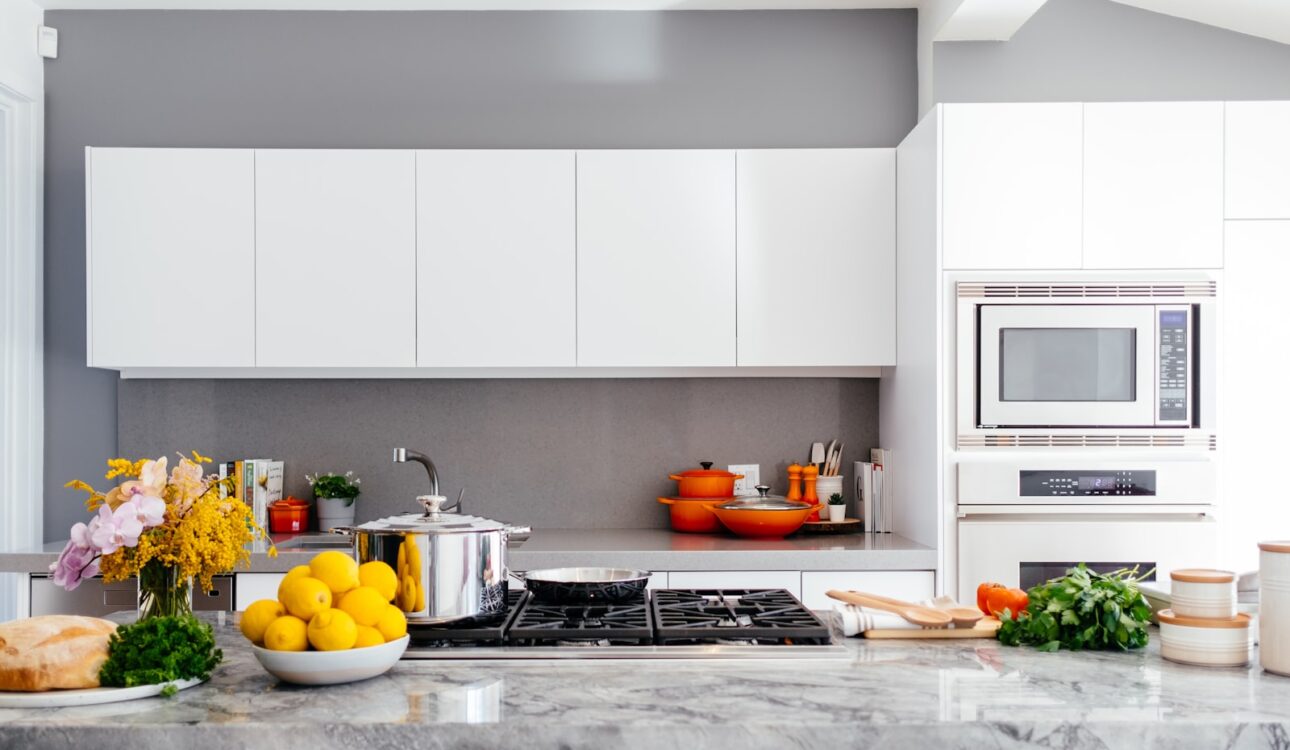
Walk into a kitchen with acrylic fronts and the first thing you notice is that light reflects off the surface almost like a mirror. That optical depth is what makes acrylic the first choice for anyone who wants a modern, glossy kitchen — but the market is full of products sold as “acrylic” that are nothing of the sort.
What acrylic actually is
Acrylic is a clear polymer sheet bonded to the board under pressure and heat, with its edge finished in a colour-matched band. The thickness of that layer and the quality of the bond are the difference between a kitchen that stays glossy for ten years and one whose edges start lifting after two.
How to tell real acrylic
- Look at the door edge. Real acrylic has a colour-matched band with no visible glue line.
- Look at your reflection. Acrylic gives a clear, mirror-like reflection; glossy laminate gives only a surface shine with no depth.
- Ask for the sheet thickness in millimetres. One millimetre or more. A supplier who will not state the number is not using it.
What acrylic gives you
- Colour that does not fade. Acrylic sheet is UV-stable, unlike gloss lacquer, which yellows.
- Nothing stains it. Non-porous, so turmeric, tomato, coffee and oil all wipe off completely.
- Light scratches polish out. A real advantage no laminate offers — we hand over the polishing compound with every kitchen.
- It makes a small kitchen feel larger, because reflection widens a room more than any paint colour.
What you should know before deciding
We will not pretend a material is perfect:
- Fingerprints show on dark gloss. On black, navy or graphite every fingerprint is visible. On white, cream or light grey they are almost invisible. And there is a real solution most people are never offered: matte acrylic — the same solid sheet with a satin surface. You keep the depth and the UV stability, and fingerprints disappear entirely.
- A deep gouge cannot be polished out. Light scratches buff away; a real cut through to the board does not. A single door is replaceable, and we keep your colour reference on file.
- Cheap acrylic lifts at the edges. A thin sheet, or an edge band applied with cold glue instead of heat, will separate at the corners after a few years of steam.
When acrylic is the right choice
| Your situation | The call |
|---|---|
| You want a modern look and your budget allows it | ✅ Acrylic |
| Your kitchen is small and you want it to feel wider | ✅ Light acrylic or glass |
| You want the gloss on a smaller budget | Acrylic with formica |
| Your kitchen is exposed to very high heat | Aluminium |
| You prefer classic warmth | Natural timber |
A saving our clients use
Put acrylic where the kitchen is seen and formica where it is used — glossy uppers at eye level, durable lowers that take the knocks and the water. It saves 25–40% against a full acrylic kitchen and is often more durable. It has its own page: acrylic & formica kitchens.
Working with us
We are an integrated factory that supplies its own materials. Acrylic bonding is a controlled pressing process with a temperature and a dwell time — not a hand-glued job — and we do not subcontract it. Free measuring, a 3D design before manufacturing, installation by our own crew, and a ten-year written warranty.
We serve Riyadh, Al-Ahsa, Buraydah and Hail.
Ready to have your kitchen built?
Send us the length of your kitchen wall and we will arrange a free measuring visit, with a 3D design that shows you the kitchen before manufacturing.