
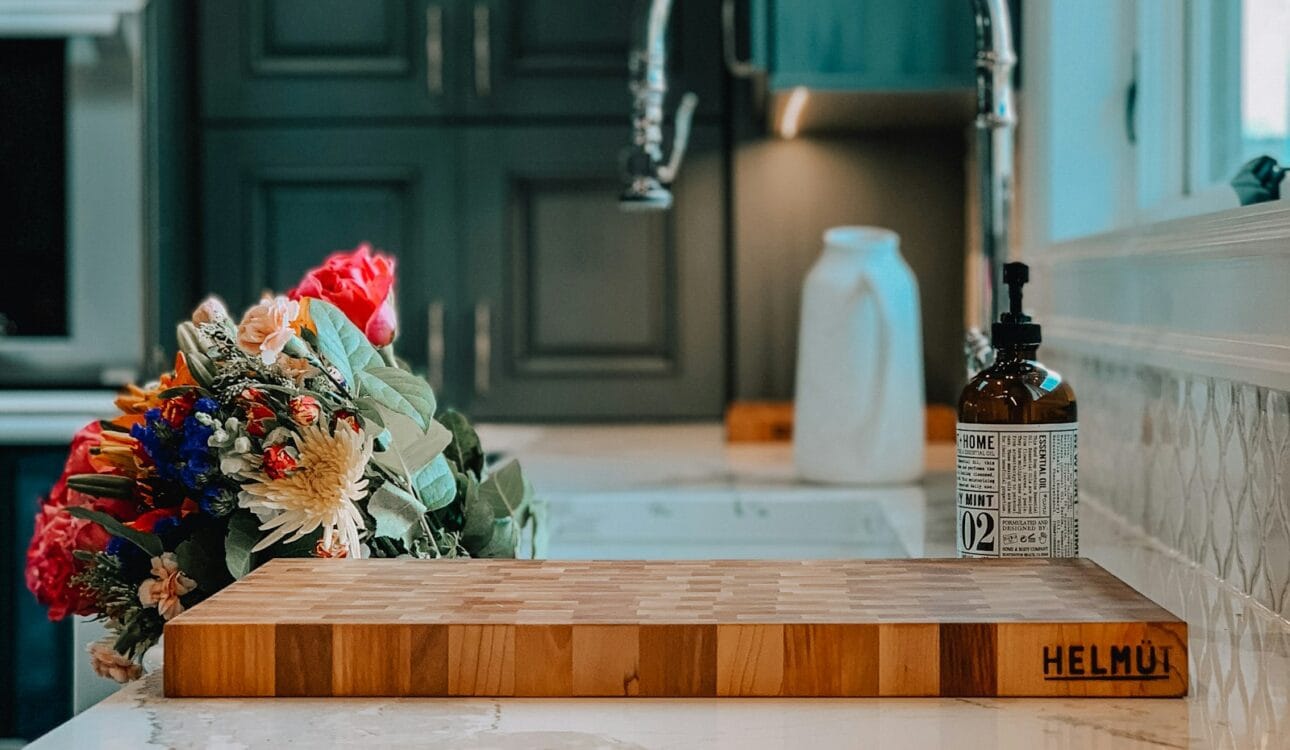
The worktop is the part of the kitchen that works hardest. It is cut on, spilled on, heated, scrubbed and leaned on every single day. It also dominates the look of the kitchen: in many rooms it is the largest continuous surface after the floor. Choosing it well is one of the few decisions that affects both how your kitchen looks and how it ages.
Clients often arrive with a picture of a white marble worktop and leave with quartz, or arrive asking for “granite like my mother’s kitchen” and choose porcelain. That is not because one material is better in general, but because each one behaves differently with heat, acids, sunlight, stains and impacts. This guide compares the main worktop materials used in Saudi kitchens today, explains the details that matter during installation, and gives you a simple way to match the material to your family’s habits. It is written from the perspective of a Riyadh kitchen factory: we design the cabinets that carry the worktop, so we see every day what makes a worktop succeed or fail.
Start with how you use the kitchen
Before comparing materials, answer three honest questions. They will narrow the choice faster than any catalogue.
- How heavy is your daily cooking? Frying, large pots and trays straight from the oven put far more stress on a worktop than light breakfasts and coffee.
- How careful will everyone be? A household with children, helpers or frequent guests needs a forgiving surface. A kitchen used mostly by one careful person can accept more delicate materials.
- How much maintenance are you willing to do? Some surfaces need periodic sealing and quick wiping of spills; others need almost nothing.
Keep your answers in mind as you read the comparison below.
Quartz: the balanced everyday choice
Engineered quartz is made from crushed natural quartz bound with resins and pigments, then pressed into slabs. The result is a dense, non-porous surface with consistent colour and pattern.
Strengths
- Non-porous: it does not absorb coffee, oil, turmeric or juice easily, so it resists staining and does not need sealing.
- Consistent appearance: the colour and pattern of one slab match the next, which helps on long runs and islands.
- Wide range: from plain white and grey to convincing marble-look veining.
- Low maintenance: warm water and a mild detergent are usually enough.
Weaknesses
- Heat sensitivity: the resin can discolour or crack under sudden high heat. Hot pots should go on a trivet.
- Sunlight: some colours can change over years of strong direct sunlight, so quartz is not ideal for outdoor kitchens or worktops under large, unshaded windows.
- Harsh chemicals: strong solvents and bleach-based products can damage the surface.
Best for: busy family kitchens, islands with seating, and anyone who wants a marble look with far less worry.
Porcelain and sintered stone: the toughest surface
Porcelain and sintered stone slabs are made from natural minerals fired at very high temperatures. They are often thinner than quartz — around 12 mm is common — and can reproduce stone, concrete and marble patterns with great realism.
Strengths
- Excellent heat resistance: it tolerates hot pans far better than quartz.
- UV stable: the colour does not fade in sunlight, which makes it suitable near large windows and even outdoors.
- Stain and scratch resistant: it is very hard and non-porous.
- Slim and modern: thin slabs give a sleek, contemporary edge.
Weaknesses
- Edge chipping: the hardness that resists scratches also makes edges and corners vulnerable to chips from heavy impacts.
- Needs expert fabrication: cutting, mitred edges and sink openings require specialist tools and experience.
- Support is critical: thin slabs need a flat, fully supported base; unsupported overhangs are risky.
- Pattern on the surface: on some slabs the pattern is printed on the surface, so a chipped edge may show a different colour beneath.
Best for: heavy cooking, kitchens with strong sunlight, and modern designs that want a thin, precise edge.
Granite: hard-wearing natural stone
Granite is a natural igneous stone, quarried and cut into slabs. Each slab is unique, with speckled or flowing patterns.
Strengths
- Hard and durable: resistant to scratches and everyday knocks.
- Heat tolerant: copes well with hot pans, though a trivet is still good practice.
- Natural character: no two kitchens look exactly alike.
Weaknesses
- Porosity varies: many granites benefit from sealing to resist oil and stain absorption.
- Pattern variation: the slab in the showroom may differ from the one delivered, so choosing the actual slab is wise.
- Style: busy speckled patterns can look dated in minimalist designs, though many modern granites are calmer.
Best for: families who cook heavily and like natural stone, and traditional or warm interior styles.
Marble: beautiful and demanding
Marble has a softness and depth of veining that no other surface quite matches. It is also the most demanding worktop in daily life.
Strengths
- Unmatched beauty: soft, luminous veining that gives a luxurious look.
- Cool surface: traditionally loved for pastry and baking.
Weaknesses
- Etching: acids such as lemon juice, vinegar, tomato and some cleaners dull the polished surface on contact.
- Staining: coffee, oil and turmeric can leave marks if not wiped quickly.
- Scratches: marble is softer than granite, quartz and porcelain.
- Maintenance: regular sealing and careful cleaning are required.
Best for: clients who accept a lived-in patina, low-use presentation kitchens, or accent areas such as a coffee corner. For many families, marble-look quartz or porcelain gives the appearance with far less worry.
Other worktop options
Solid surface
Acrylic-based solid surfaces can be joined almost invisibly and even formed into integrated sinks. Scratches can often be sanded out. They are less heat resistant than stone, so trivets are essential.
Laminate
High-pressure laminate worktops are the most budget-friendly. Modern laminates look far better than older versions, but they are vulnerable to heat, deep cuts and water entering exposed edges and joints.
Stainless steel
Common in professional kitchens, stainless steel is hygienic and heat resistant. It scratches and shows fingerprints, which some people like as patina and others dislike.
Wood
Solid wood worktops bring warmth, but near sinks they need constant care against water. In Saudi kitchens we usually recommend wood only for islands, breakfast bars or dry zones.
Comparison at a glance
- Heat: porcelain and granite perform best; quartz and solid surface need trivets.
- Stains: quartz and porcelain perform best; marble is the most vulnerable.
- Scratches: porcelain, quartz and granite perform well; marble and solid surface are softer.
- Sunlight: porcelain is the most stable; some quartz colours may change over long exposure.
- Edges and chips: quartz and granite are more forgiving; thin porcelain edges need care.
- Maintenance: quartz and porcelain need the least; marble and some granites need sealing.
Thickness, edges and joints
Thickness
Porcelain and sintered stone are commonly around 12 mm. Quartz and natural stone are usually 20 or 30 mm. A thinner slab looks contemporary but needs precise, flat support, and it is usually not suitable for large unsupported overhangs. A thicker slab is more forgiving and can carry a moderate overhang with appropriate support.
Edge profiles
A slightly eased square edge is the most practical: it looks clean and resists chipping better than a razor-sharp edge. Mitred edges create the look of a thick slab from a thin one, especially on islands, but they need expert fabrication. Rounded or bevelled profiles suit classic kitchens.
Joints
Long runs and L-shapes often need joints. A good fabricator places joints where they are least visible and away from sink and cooktop cut-outs, and matches the pattern across the join. Ask where the joints will be before fabrication, especially with marble-look patterns.
Sinks, cooktops and cut-outs
The sink and cooktop decide the shape of the cut-outs, so their exact models must be confirmed before the worktop is templated.
- Undermount sinks: fixed beneath the worktop, they allow crumbs to be wiped straight into the bowl and look seamless. They need a polished cut-out edge, which suits stone, quartz and porcelain.
- Top-mount sinks: sit on the worktop with a rim. They are simpler and suit laminate and budget projects.
- Drainer grooves: can be cut into stone and quartz next to the sink, though they need regular cleaning.
- Cooktops: flush-mounted cooktops look elegant but need precise cutting; the manufacturer’s installation clearances must be followed.
- Tap holes: decide the tap position and any extra holes (filtered water, soap dispenser) before fabrication.
How the cabinets must support the worktop
This is where kitchen design and worktop choice meet, and where many problems start. A heavy stone slab on weak or uneven cabinets will crack, and a thin porcelain slab on a frame with gaps will break under load.
- Base cabinets must be level and rigid, with enough support points along the length.
- Around sinks and dishwashers, where the carcass may be interrupted, extra support rails are often needed. Water-resistant structures such as aluminium carcasses are particularly sensible here.
- Overhangs for seating need hidden steel brackets or a slab thick enough to carry them.
- Corners and L-joints need solid support directly under the joint.
Whether the worktop is included in your kitchen quotation or supplied separately, the cabinets must be designed around it. When we design a kitchen, we ask for the worktop material and thickness at the start, because it affects the cabinet structure, heights and overhangs.
Colour and finish: what ages well
The colour you love in a showroom can behave very differently under your own light and daily use.
- Very dark polished surfaces look luxurious but show dust, crumbs, water marks and fingerprints.
- Pure white matte surfaces look fresh but can show stains from coffee and spices on some materials.
- Mid-tones with a gentle pattern are the most forgiving; small marks disappear into the design.
- Polished versus honed: polished finishes reflect light and resist staining better; honed (matte) finishes hide scratches but can show grease marks.
Always see a real sample next to your cabinet fronts and floor, in daylight and under your planned kitchen lighting. A worktop that looks cool grey in a showroom may look warm beige in a kitchen facing the afternoon sun.
Matching worktops with cabinet materials
The worktop and fronts should work together rather than compete.
- Wood kitchens: calm stone or quartz with soft veining complements the grain; avoid busy patterns that fight with it.
- High-gloss acrylic: a honed or matte worktop balances the shine and reduces glare.
- Glass fronts: porcelain with a thin edge suits their sleek, modern character.
- Formica and acrylic with formica: quartz in neutral tones gives a premium look to a budget-conscious kitchen.
- Saj and aluminium: durable surfaces such as porcelain or granite match their practical character.
Care and cleaning by material
- Quartz: warm water and mild detergent; avoid bleach and solvents; always use trivets.
- Porcelain: almost any non-abrasive cleaner; protect edges from heavy impacts.
- Granite: pH-neutral cleaner; reseal when water stops beading on the surface.
- Marble: wipe spills immediately, especially acids; use pH-neutral stone cleaner; reseal regularly.
- Solid surface: mild cleaner; light scratches can be buffed out by a specialist.
- Laminate: keep joints and edges dry; never cut directly on the surface.
Worktop and backsplash: planning them together
The wall between the worktop and the wall cabinets takes almost as much abuse as the worktop itself: oil splashes behind the cooktop, water behind the sink, and steam from kettles and coffee machines. Many clients now choose to continue the worktop material up the wall as a full-height backsplash. This gives a seamless, easy-to-clean surface with no grout lines, and it makes a strong visual statement, especially with marble-look quartz or porcelain.
If you choose a full-height backsplash, it must be planned before fabrication. Socket and switch positions need precise cut-outs, the wall must be flat and plumb, and the joint between worktop and backsplash should be sealed carefully. A lower upstand of about 10 cm is a more economical alternative that still protects the wall directly behind the worktop. Tiles remain a flexible option too, but grout lines behind the cooktop collect grease over time and need regular cleaning.
Behind the cooktop in particular, heat resistance matters. Porcelain and natural stone handle it well. Glass backsplashes, which we often pair with glass kitchens, must be tempered and installed with the clearances recommended for the cooktop.
Worktops in the Saudi climate
Saudi homes present specific conditions that affect worktops. Strong sunlight through large windows can change the colour of some resin-based surfaces over the years, which is why porcelain is often recommended for kitchens with west-facing glazing. Dust is part of daily life in Riyadh, and very dark polished surfaces make it more visible. In Al-Ahsa, where humidity is higher, any exposed edge of a laminate or wooden worktop near the sink needs extra attention. And in kitchens where heavy cooking produces a lot of grease, non-porous surfaces such as quartz and porcelain are far easier to keep clean than porous stone.
None of these conditions rule out a material, but they shift the balance. A marble worktop can be a joy in a presentation kitchen with little cooking, while the same slab in the main family kitchen may become a constant worry. Thinking about where the kitchen sits in the house, how much sun it receives and how it is used will lead you to the right choice more reliably than following trends.
Value for money: where to invest
Worktop prices vary widely between materials, brands and slab sizes. Rather than choosing the most expensive surface everywhere, consider investing where the worktop is most visible and most used — usually the island and the main run with the sink and cooktop — and using a more economical option in secondary areas such as a laundry counter or a back kitchen. If you have two kitchens, the presentable front kitchen can carry the premium material while the service kitchen uses a tough, easy-care surface.
Also remember that fabrication details affect cost as much as the material itself: mitred edges, full-height backsplashes, waterfall ends on islands, undermount sink polishing and extra cut-outs all add work. An itemised quotation shows these separately, so you can decide which details are worth it for you.
What happens on installation day
Knowing the sequence helps you avoid delays. First, the base cabinets are installed, levelled and fixed. Second, the worktop fabricator takes a precise template, including the exact sink, cooktop and tap positions. Third, the slabs are cut and finished in the workshop, which usually takes some days depending on the material and complexity. Finally, the worktop is installed, joints are bonded and sealed, and the sink is fixed. During this period, avoid placing heavy loads on the base cabinets and keep the kitchen free of other trades so the template stays accurate. Once installed, give sealants time to cure before heavy use, and follow the care instructions for your chosen material from the first day.
Common worktop mistakes
- Choosing marble for a busy family kitchen and being disappointed by etching.
- Putting hot pots directly on quartz.
- Templating before the sink and cooktop models are confirmed.
- Thin porcelain on cabinets that are not flat and fully supported.
- Seating overhangs without hidden brackets.
- Choosing a colour from a small sample under showroom lights only.
- Not asking where joints will fall on long runs and islands.
How we plan worktops at Modern Palace
During the free measuring visit we ask about your cooking habits and the look you want, then recommend worktop materials that suit both. In the 3D design you can see the worktop colour with your chosen fronts, and we design the cabinet structure — support rails, overhang brackets, sink areas — around the worktop thickness. The final worktop template is taken once the base cabinets are installed and levelled, so the slab fits your real walls and cabinets exactly. Our own teams handle the installation, and the kitchen is covered by our written 10-year warranty. For an overview of how materials affect cost, read our kitchen pricing guide, and for islands, which often have the longest worktops, see our kitchen island guide.
Quick decision guide
- Busy family, low maintenance: quartz.
- Heavy cooking, strong sunlight, modern look: porcelain or sintered stone.
- Natural stone lover who cooks a lot: granite.
- Luxury look, careful use, accepts patina: marble.
- Tight budget: good-quality laminate, with extra care near the sink.
A worktop is chosen once and lived with for many years. Taking the time to match the material to your habits — not only to a photo — is the best way to make sure it still looks good long after the kitchen is installed.
Frequently asked questions
Which kitchen worktop is best for Saudi homes?
There is no single best worktop. Quartz is the most balanced choice for everyday family use because it is non-porous and resists stains. Porcelain or sintered stone is the strongest option against heat and sunlight. Granite is hard-wearing and heat-tolerant but needs sealing. Marble is beautiful but etches with acids and stains more easily, so it suits careful users or low-use areas.
Can I put hot pots directly on a quartz worktop?
It is not recommended. Quartz contains resin binders that can discolour or crack with sudden high heat. Always use a trivet or heat pad for pots taken straight from the stove or oven. Porcelain and granite tolerate heat much better.
Does marble stain from lemon or coffee?
Yes. Marble is a calcium-based stone, so acids such as lemon juice, vinegar and some cleaning products can etch its polished surface, and coffee, oil and turmeric can stain it if not wiped quickly. Regular sealing reduces staining but does not prevent etching.
What thickness should my worktop be?
Common thicknesses are about 12 mm for porcelain and sintered stone, and 20 or 30 mm for quartz and natural stone. Thin slabs look sleek but need full, flat support underneath; thicker slabs are more forgiving for overhangs and edges. The cabinet design must be planned around the chosen thickness.
When is the worktop measured?
For stone, quartz and porcelain, the final template is normally taken after the base cabinets are installed and levelled, so that the slab fits the real cabinet positions and walls exactly. The sink, cooktop and tap models should be confirmed before templating.
How do I choose a worktop colour?
See a real sample in daylight and under your kitchen lighting, next to your cabinet fronts and floor. Very dark polished surfaces show dust and water marks; very white matte surfaces can show stains. Mid-tones with a gentle pattern are the most forgiving in daily use.
Choosing a worktop for your new kitchen?
We measure for free, recommend the right surface for how you cook, and show it with your cabinet fronts in a 3D design before manufacturing. Riyadh, Al-Ahsa, Buraidah and Hail.