
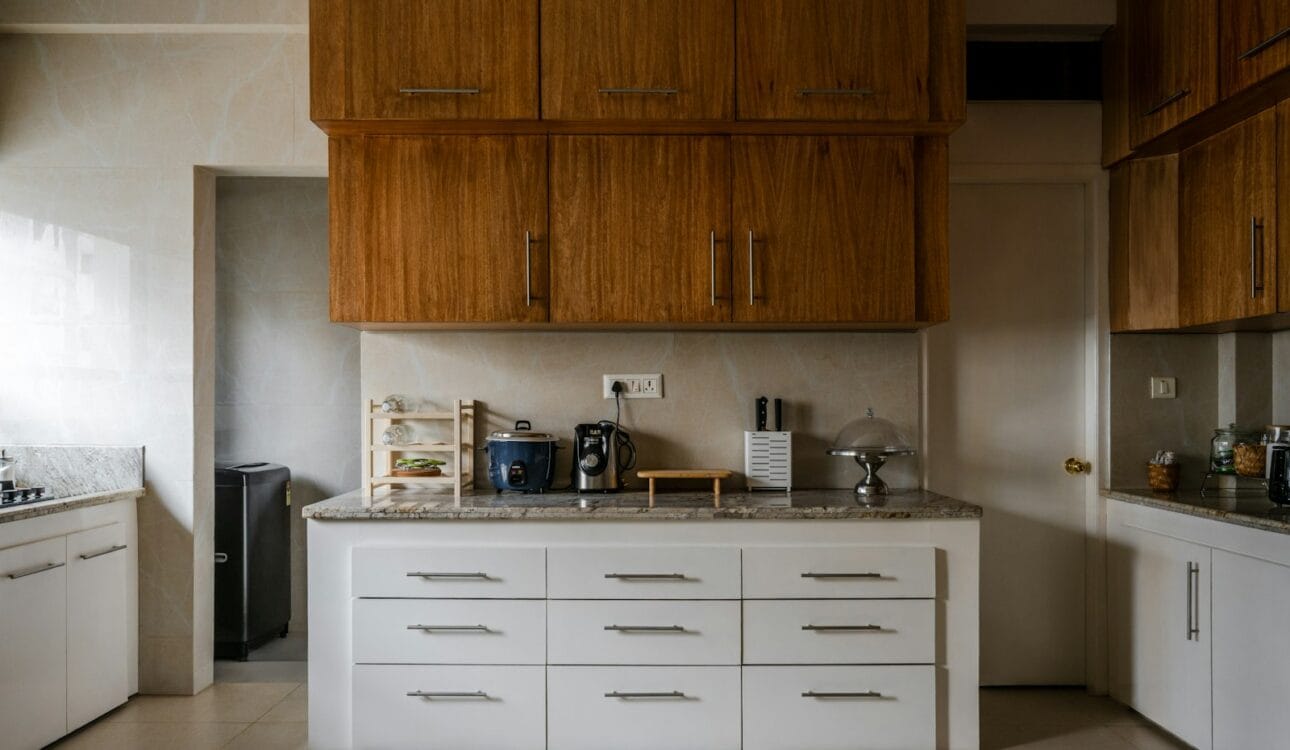
A well-made kitchen is designed to last for many years, but how it looks after five or ten years depends a great deal on how it is cared for. The good news is that caring for a modern kitchen is simple. Most damage does not come from heavy use; it comes from the wrong cleaning products, water left standing on edges, heat and steam in the wrong places, and small mechanical issues that are ignored until they become big ones.
This guide explains how to clean and maintain each part of the kitchen, material by material. It covers the seven front materials we manufacture — wood, tempered glass, aluminium, acrylic, formica, acrylic with formica, and saj — as well as worktops, hardware, sinks, hoods and appliances. It is based on the experience of a Riyadh kitchen factory that has installed more than 5,000 kitchens since 2015 and has seen which habits keep kitchens looking new and which quietly damage them. Always follow the specific care instructions provided with your kitchen and appliances, since products and finishes vary.
General principles that apply to every kitchen
Before looking at individual materials, a few principles apply everywhere. They prevent the majority of problems.
Use soft cloths and mild cleaners. A microfibre cloth, warm water and a small amount of mild, pH-neutral detergent will clean almost every surface in a kitchen safely. Abrasive pads, scouring powders, steel wool and strong solvents cause scratches, dull finishes and damage coatings.
Wipe, then dry. Water left on surfaces leaves marks, and water that reaches edges, joints and hinge holes can gradually damage materials. After cleaning, a quick wipe with a dry cloth makes a big difference.
Spray onto the cloth, not the cabinet. Spraying cleaners directly onto doors lets liquid run into edges, frames and hardware. Spraying onto the cloth gives you control.
Deal with spills immediately. Oil, coffee, tea, turmeric, tomato and citrus can stain or etch some surfaces if left. A quick wipe right away prevents most permanent marks.
Protect from heat and steam. Kettles, coffee machines, rice cookers and slow cookers release steam that rises onto wall cabinets. Place them where steam does not hit cabinet undersides directly, or use them under the hood. Open the dishwasher only after the steam has settled.
Run the hood when cooking. Good extraction reduces the grease film that settles on cabinets, walls and ceilings. See our ventilation guide.
Test new products in a hidden spot. Before using a new cleaner on your fronts or worktop, try it on a small, unseen area.
Caring for each front material
Wood
Wood kitchens bring warmth and character, and with sensible care they age gracefully. Wipe the fronts with a slightly damp cloth and a mild detergent, then dry immediately. Avoid leaving water on edges and around handles, and never hang wet towels over doors. Keep wood away from direct steam from kettles and dishwashers. Sudden, large changes in humidity can cause wood to move slightly, so a stable indoor environment helps; this matters more in humid areas such as Al-Ahsa. For the finish itself — lacquer, paint or oil — use only products recommended for that specific finish. Minor scratches in some finishes can be repaired by specialists, so ask before attempting it yourself.
Tempered glass
Glass fronts are among the easiest to keep clean, because the surface is hard and non-porous. Remove dust, then clean with a non-abrasive glass cleaner or a mild solution of water and a little vinegar, spraying onto the cloth rather than the door. Dry with a lint-free cloth for a streak-free finish. Avoid knocking the edges with heavy objects, since edges and corners are the most vulnerable points of any glass. Check occasionally that glass doors remain firmly held in their frames or hinges.
Aluminium
Aluminium kitchens are chosen for their resistance to water, heat and insects, and they are very low maintenance. Clean the profiles and panels with a damp cloth and mild detergent, and avoid abrasive products that could scratch the coating. Pay attention to the tracks and corners of profiles, where dust and grease can collect; a soft brush helps. Dry after cleaning to avoid water marks on darker colours.
Acrylic
Acrylic fronts have a deep, mirror-like gloss that is beautiful and durable, but it rewards gentle care. Use only soft microfibre cloths, never paper towels, rough sponges or dusters that can drag grit across the surface. Remove dust first with a dry or slightly damp cloth, then clean with mild detergent and dry immediately. Avoid alcohol-based and solvent cleaners. Fine surface marks can often be reduced with a polish recommended by the manufacturer. Protective films should be removed carefully at handover.
Formica
Formica fronts are practical and resistant to everyday wear. Clean with a damp cloth and mild detergent. The critical point is the edges: water that gets behind the edge banding over time can damage the board beneath, so wipe edges dry, especially around the sink and dishwasher, and report any lifting edge early so it can be re-bonded.
Acrylic with formica
Acrylic with formica combines acrylic fronts with formica elsewhere. Care for the acrylic surfaces as described for acrylic, with soft cloths and gentle cleaners, and for the formica parts as described for formica, paying attention to edges near water.
Saj
Saj kitchens are dimensionally stable and water resistant, with a painted or coated finish. Clean with a soft cloth and mild detergent, avoid abrasives that could scratch the coating, and dry after cleaning. If the coating is ever chipped by an impact, have it touched up promptly to protect the surface beneath.
Caring for the carcass and interiors
The inside of cabinets deserves attention too. Empty and wipe drawers and shelves periodically, especially in food cabinets and under the sink. Use drawer liners in utensil and food drawers to make cleaning easier. Keep the area under the sink dry and check it every few months for drips; a protective tray at the base makes leaks visible early. Do not store wet items in closed cabinets.
Caring for worktops
Each worktop material has its own care needs. Our worktop comparison explains them in detail; the essentials are:
- Quartz: warm water and mild detergent; avoid bleach and solvents; always use trivets for hot pots.
- Porcelain and sintered stone: tolerant of most non-abrasive cleaners; protect edges from heavy impacts.
- Granite: pH-neutral stone cleaner; reseal when water stops beading.
- Marble: wipe acids immediately; use pH-neutral stone cleaner; reseal regularly; accept a natural patina.
- Laminate: keep joints and edges dry; never cut directly on it; avoid hot pans.
Whatever the material, use chopping boards, trivets and coasters. They protect the worktop far more than any cleaning product.
Caring for hardware
Hinges, drawer runners and lift systems are designed for many years of use with minimal care. Check door alignment after the first few months, when the kitchen settles, and then roughly once a year; most concealed hinges adjust with a screwdriver. Keep runners free of crumbs and spills by wiping them with a damp cloth and drying. Do not overload drawers beyond their rated capacity. Tighten loose screws promptly before the holes wear. Do not oil soft-close dampers or ball bearings unless the manufacturer recommends it, because oil attracts dust. Our hardware guide explains adjustment in more detail.
Caring for the sink and tap
Stainless steel sinks look best when cleaned regularly with a mild detergent and dried to prevent water spots; clean in the direction of the grain. Composite and granite sinks need non-abrasive cleaners and occasional deeper cleaning to remove limescale and stains. Taps should be wiped and dried; limescale on aerators can be removed by soaking in diluted vinegar. Clean the drain strainer regularly and avoid pouring oil or grease down the drain, which causes blockages over time.
Caring for the hood
The hood works hard and needs regular attention. Metal grease filters should be washed every few weeks in kitchens with daily cooking — many are dishwasher-safe. Charcoal filters in recirculating hoods must be replaced according to the manufacturer’s schedule. Wipe the hood body with a mild detergent; stainless steel hoods look best when cleaned along the grain. A clean hood extracts better, runs more quietly and reduces grease on the surrounding cabinets.
Caring for integrated appliances
Integrated appliances are hidden behind cabinet fronts, but they affect the cabinets around them. Clean the dishwasher filter regularly and check door seals so steam and water do not escape. Keep the ventilation gaps around built-in ovens and refrigerators clear, because blocked ventilation can overheat both the appliance and neighbouring cabinets. Follow each manufacturer’s maintenance instructions.
Seasonal and periodic tasks
A simple routine keeps the kitchen in good condition without much effort:
- Daily: wipe the worktop and spills; run the hood when cooking; dry around the sink.
- Weekly: wipe cabinet fronts, especially near the cooktop; clean the sink and tap; wipe the hood.
- Monthly: wash hood grease filters; clean the dishwasher filter; wipe handles and edges thoroughly.
- Every few months: empty and clean drawers and the sink cabinet; check for drips; check door alignment.
- Yearly: review hinges, runners and lift systems; reseal natural stone if needed; check silicone joints around the sink and worktop.
The Saudi climate and your kitchen
Dust is a daily reality in Riyadh. Closed storage, regular dusting with a dry microfibre cloth, and finishes that do not show dust easily all help. Wiping dust dry before wet cleaning prevents grit from scratching glossy surfaces. In Al-Ahsa and other humid areas, moisture control matters more: run the hood during cooking, dry water promptly and keep the sink area ventilated. Strong sunlight through large windows can affect some finishes and resin-based worktops over time; blinds or tinted glass help. Air conditioning dries indoor air, which is generally good for cabinets, but avoid directing airflow straight at wooden fronts.
Products to avoid
- Abrasive powders, creams and scouring pads.
- Steel wool and hard brushes.
- Strong solvents such as acetone or thinners.
- Undiluted bleach and harsh chlorine products.
- Alcohol-based cleaners on acrylic.
- Acidic cleaners on marble and some natural stones.
- Wax and oil polishes unless recommended for your finish.
- Steam cleaners directed at cabinet edges and joints.
Dealing with the most common stains
Every kitchen meets the same stains sooner or later, and knowing how to handle them without damaging the surface saves a lot of worry.
Grease film on cabinets near the cooktop. This is the most common complaint, especially in homes that fry often. Warm water with a few drops of mild dish detergent cuts grease effectively. Wipe with a soft cloth, rinse the cloth, wipe again with clean water, then dry. For stubborn build-up above the cooktop, repeat rather than scrubbing harder; patience protects the finish. Running the hood during every cooking session is the best prevention.
Turmeric and saffron. These spices stain quickly on light surfaces. Wipe immediately. On non-porous surfaces such as quartz, glass and acrylic, most marks lift with mild detergent. On porous stone, a specialist stone cleaner may be needed. Sunlight often fades residual turmeric marks over a few days on light surfaces.
Coffee and tea. Arabic coffee and tea are part of daily life, and drips around the coffee corner are inevitable. Wipe promptly; dried coffee on marble or porous stone can leave a ring. Coasters and a small tray under the dallah make a noticeable difference.
Limescale around the sink and tap. Hard water leaves white deposits. A cloth dampened with diluted vinegar removes them from stainless steel and taps, but never use vinegar or acidic products on marble or limestone, which they will etch.
Fingerprints on glossy and dark fronts. A dry or barely damp microfibre cloth removes most fingerprints without any product. Handleless kitchens with push-to-open mechanisms naturally collect prints where people press, so a quick daily wipe of those spots keeps the kitchen looking clean.
Adhesive residue from protective films or labels. Remove it gently with a soft cloth and a little mild detergent. Avoid scraping with blades or using solvents on acrylic and coated surfaces; ask the kitchen maker if residue remains.
Involving the whole household
A kitchen is used by the whole family and, in many homes, by domestic helpers. Care instructions only work if everyone who cleans the kitchen knows them. It helps to keep a small set of approved products and cloths in the sink cabinet, remove harsh products that should not be used on your surfaces, and explain the few important rules — soft cloths, no abrasives, dry after cleaning, wipe spills immediately, use trivets. A short printed note inside a cabinet door is often enough. Many finish problems we see come not from the kitchen’s owner but from a well-meaning family member or helper using a strong product from habit.
Refreshing an older kitchen
If your kitchen is already a few years old and looks tired, a careful deep clean can transform it before you consider replacement. Empty the cabinets, clean the interiors, degrease the fronts section by section, polish handles, clean or replace hood filters, re-silicone joints around the sink if they have discoloured, and adjust all hinges and runners. Often this, combined with new lighting under the wall cabinets, makes a kitchen look years younger. If components are genuinely worn — a failed hinge, a damaged front, a swollen cabinet under the sink — many can be replaced individually rather than replacing the whole kitchen.
Choosing materials with maintenance in mind
The easiest kitchen to maintain is one whose materials were chosen with the family’s habits in mind from the start. A household that cooks heavily every day and wants minimal upkeep may prefer tempered glass or coated fronts that wipe clean easily, water-resistant structures around the sink, and a quartz or porcelain worktop. A household that loves the warmth of wood and enjoys caring for it will be happy with wooden fronts that age gracefully. A family with young children might avoid very dark high-gloss fronts that show every fingerprint, or choose a softer satin finish. There is no wrong material, only a mismatch between material and lifestyle. Our guide to choosing the best kitchen material can help you weigh appearance against upkeep before you decide.
Maintenance, in the end, is a partnership between good materials, good installation and good habits. When all three are in place, a kitchen stays beautiful far longer than most people expect.
If you are ever unsure whether a product is safe for your kitchen, ask us before using it. A two-minute question can prevent damage that no cleaning can undo, and we are always happy to advise on the materials we manufactured for you.
With the right routine, your kitchen will keep its colour, shine and smooth movement for many years, and every visit to it will feel as fresh as the day it was installed.
Small habits, repeated daily, are the real secret of a kitchen that still looks new after a decade of family life.
Enjoy your kitchen, and care for it gently.
When to call for help
Some issues are best handled by the kitchen maker rather than attempted at home: a door that keeps sagging after adjustment, a drawer that sticks or drops, a lifting edge band, a chipped glass edge, a leak inside a cabinet, or a worktop joint that opens. Report these early with photos. Under a written warranty, many such issues are covered, and early attention prevents small problems from spreading.
How we support your kitchen at Modern Palace
At handover, we explain the care of your specific materials and provide written instructions. We show you where valves and LED drivers are, and how to adjust hinges if needed. Our kitchens are manufactured in our Riyadh factory and covered by a written 10-year warranty, and we are available for follow-up whenever you need us. For what to check on the first day, read our kitchen handover checklist.
Caring for a kitchen does not require special skills or expensive products. Soft cloths, mild detergent, a dry cloth afterwards, and a few minutes of attention each week are enough to keep it looking and working like new for many years.
Frequently asked questions
What is the safest way to clean kitchen cabinet fronts?
For almost all fronts, a soft microfibre cloth dampened with warm water and a little mild, pH-neutral detergent is safest. Wipe gently, then dry with a clean soft cloth. Avoid abrasive pads, scouring powders, strong solvents and undiluted bleach.
How do I clean high-gloss acrylic without scratching it?
Use only soft microfibre cloths, never paper towels or rough sponges. Remove dust first, then wipe with a damp cloth and mild detergent, and dry immediately. Special acrylic polishes recommended by the manufacturer can reduce fine marks.
Can I use glass cleaner on glass kitchen fronts?
Yes, a standard non-abrasive glass cleaner or diluted vinegar solution works on tempered glass fronts. Spray onto the cloth rather than directly onto the door, so liquid does not run into frames and hinges.
How should I care for wooden kitchen cabinets?
Wipe with a slightly damp cloth and dry immediately, avoid standing water near edges, keep them away from direct steam, and use products recommended for the specific finish. Stable indoor humidity helps wood stay dimensionally stable.
How often should hinges and drawer runners be maintained?
Quality hardware needs little maintenance. Check door alignment after the first few months and then about once a year, keep runners free of crumbs and spills, and tighten loose screws promptly. Do not oil soft-close dampers unless the manufacturer recommends it.
Does Modern Palace provide care instructions?
Yes. At handover we explain how to care for the specific fronts, structure and worktop in your kitchen and provide written care instructions. Our kitchens are covered by a written 10-year warranty, and following the care guidance helps keep them looking new.
Want a kitchen that is easy to live with?
We help you choose materials that suit your habits, explain care at handover, and back every kitchen with a written 10-year warranty. 3D design before manufacturing. Riyadh, Al-Ahsa, Buraidah and Hail.