
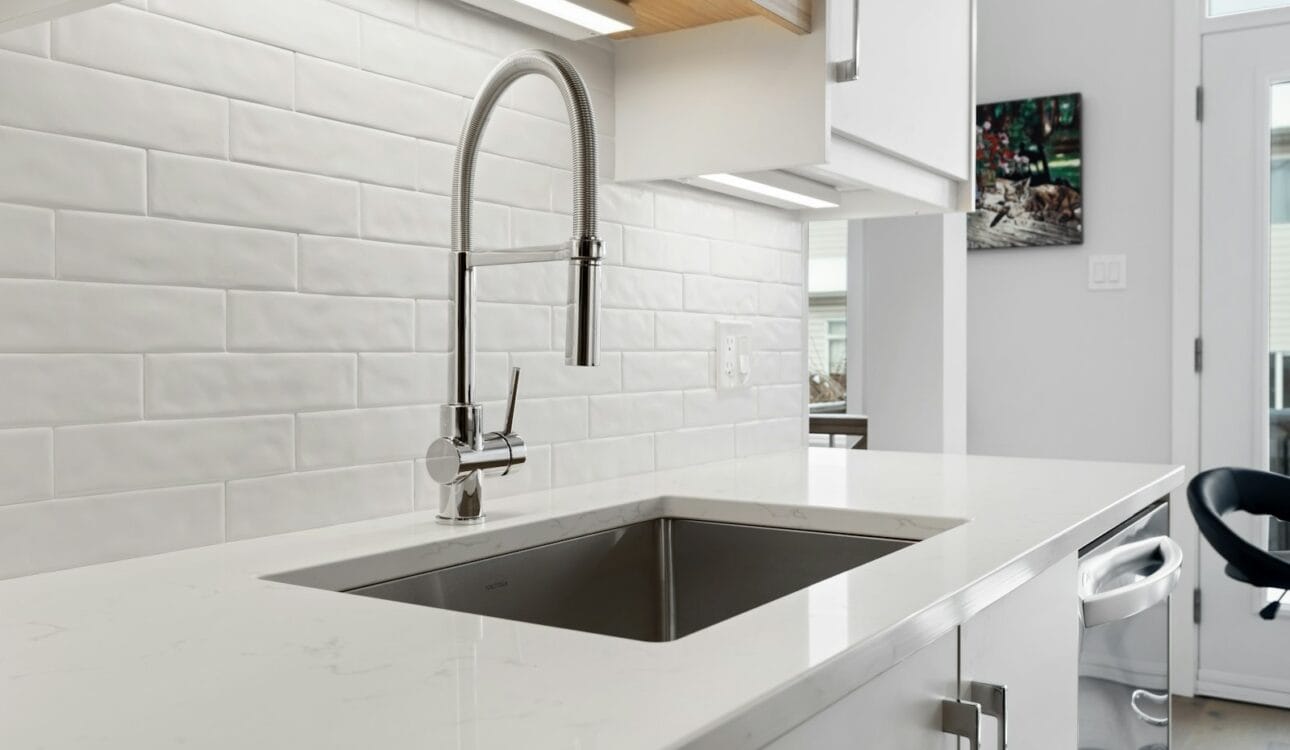
The sink is one of the most used parts of any kitchen. Every day it handles washing vegetables, rinsing meat and rice, filling pots, cleaning large cookware after family meals and washing coffee cups for guests. Yet the sink is often chosen quickly, at the end of the design process, based only on appearance. A sink that is too small, too shallow, made of the wrong material or placed in the wrong position can make daily work in the kitchen harder for years. This guide explains how to choose the right kitchen sink for a Saudi home: materials, bowl configurations, sizes, installation types, taps, accessories and the best placement in your layout.
At Modern Palace we have designed and manufactured more than 5,000 custom kitchens since 2015. Because we build the sink cabinet to measure, we plan the sink, tap, plumbing and storage beneath it together — which is the best way to avoid problems later.
Why the sink deserves careful planning
- It is the busiest zone: washing, rinsing, filling and cleaning happen at the sink many times a day, often more than any other task in the kitchen.
- It affects the whole layout: the sink position is tied to water supply and drainage, and it anchors the working triangle between the fridge and the hob.
- Saudi cooking uses large cookware: big pots, trays and rice pans need a sink that can hold them comfortably.
- Water and moisture: the sink cabinet is the part of the kitchen most exposed to leaks and humidity, so the choice of sink and cabinet material matters for durability.
Sink materials
Stainless steel
The most common kitchen sink material, and for good reason. Stainless steel is durable, heat-resistant, hygienic, and relatively affordable. It does not chip or crack, and it suits almost any kitchen style. Look for a good thickness (a heavier gauge feels more solid and is quieter), sound-deadening pads underneath, and a brushed or textured finish that hides scratches and water marks better than a mirror polish. Stainless steel can show water spots and fine scratches over time, which many people accept as part of its character.
Granite composite
Made from crushed stone bound with resin, granite composite sinks are very popular in modern kitchens. They come in matte colours such as black, grey, beige and white, and they resist scratches, stains and heat well. They are quieter than stainless steel and look premium, especially when matched with the worktop. Darker colours may show limescale deposits with hard water, so regular wiping is recommended.
Ceramic (fireclay)
Ceramic sinks have a glossy, classic look and are very easy to clean. They suit classic and farmhouse-style kitchens. They are heavy and can chip if a heavy pot is dropped on the edge, so the cabinet must be strong and the installation precise.
Quartz and solid surface
Some worktop materials can be used to create integrated sinks that flow seamlessly from the worktop. The result is elegant and easy to clean, but repairs are more complex, and heat resistance depends on the specific material.
Comparison of sink materials
| Material | Durability | Heat resistance | Maintenance | Style |
|---|---|---|---|---|
| Stainless steel | Very high | Excellent | Easy; shows water spots | All styles |
| Granite composite | High | Very good | Easy; wipe limescale | Modern, contemporary |
| Ceramic | High, can chip | Very good | Very easy | Classic, farmhouse |
| Integrated quartz / solid surface | Good | Depends on material | Easy; repairs complex | Minimal, seamless |
Bowl configurations
- Large single bowl: the best choice for washing large pots and trays. Many Saudi families prefer a large single bowl because it fits big cookware easily.
- Double bowl: allows washing in one bowl and rinsing or draining in the other, or keeping one bowl free while the other is in use. However, each bowl is smaller, which can make large pots difficult.
- One-and-a-half bowl: a large main bowl with a smaller secondary bowl for rinsing, draining or food preparation — a good compromise.
- Sink with drainer: an integrated draining board is practical if you often dry dishes by hand, but it takes worktop space.
- Workstation sink: a deep sink with ledges that hold accessories such as cutting boards, colanders and drying racks, turning the sink into a complete preparation station.
Sizes and depth
The sink size depends on the sink cabinet width and your cooking habits. As a general guide, a single-bowl sink for a family kitchen is often 60–80 cm wide, and a double-bowl sink 80–100 cm or more. Depth matters as much as width: a bowl depth of around 20–25 cm helps contain splashes and fits large pots, while very shallow bowls splash more. Very deep bowls, however, can make you bend more, especially for shorter users. Always check the largest pot and tray you use and make sure they fit comfortably. Our cabinet sizes guide explains sink cabinet widths.
Installation types
Inset (top-mount)
The sink is dropped into a cut-out in the worktop and rests on its rim. It is simple to install and replace and works with almost any worktop material, including laminate. The rim, however, creates a small edge where dirt can collect, and crumbs cannot be wiped directly into the sink.
Undermount
The sink is fixed beneath the worktop, so the worktop edge flows directly into the bowl. It looks clean and modern, and you can wipe crumbs and water straight into the sink. It requires a solid, water-resistant worktop such as quartz, porcelain or stone, with a precisely finished cut-out edge.
Flush-mount
The sink rim sits level with the worktop surface, combining the clean look of undermount with some of the practicality of inset. It requires precise worktop machining.
Integrated
The sink and worktop are made from the same material as one piece or appear seamless. This gives the most minimal look but is less flexible if the sink needs replacing.
Our worktops comparison explains which worktops are suitable for undermount sinks.
Choosing the tap
The tap is used even more often than the sink itself, so choose it carefully:
- Height and reach: a high-arc or tall spout makes it easier to fill and rinse large pots. Make sure the spout reaches the centre of the bowl.
- Pull-out or pull-down spray: very useful for rinsing the sink, washing large trays and cleaning vegetables.
- Single lever: easy to operate with one hand, even when your hands are full or oily.
- Finish: chrome and brushed steel are durable and easy to match; black, gold and bronze finishes add character but should be matched with other metal details.
- Filtered water: a three-way tap or a separate filter tap provides drinking water without a separate dispenser.
- Clearance: check the distance to the wall and to any window sill behind the sink, especially with tall taps and windows that open inward.
Where to place the sink
- Under a window: a traditional favourite, giving natural light and a view while washing. Check that the window sill height and opening type suit the tap.
- Between the fridge and the hob: the sink should sit logically in the working sequence — take food from the fridge, wash it at the sink, prepare it on the worktop, cook it on the hob.
- Near the dishwasher: ideally the dishwasher is directly next to the sink, so dishes go from sink to dishwasher without dripping across the floor.
- On an island: popular in open kitchens, allowing you to face the living area while working. It requires plumbing and drainage in the floor, planned before finishing work.
- With worktop on both sides: leave at least some worktop on each side of the sink — one side for dirty items and one for clean ones.
For more on arranging the working zones, see our kitchen layouts guide.
The sink cabinet: protecting against water
The cabinet under the sink is the most vulnerable part of the kitchen. Pipes, the waste trap, the water filter and sometimes a water heater all share this space, and any small leak can damage the cabinet if the material is not suitable. Important points:
- Choose moisture-resistant materials: aluminium and saj sink cabinets resist water very well and are a practical choice even in kitchens where other cabinets use different materials.
- Protect the base: an aluminium or waterproof mat on the cabinet floor catches drips and protects the base.
- Seal the cut-outs: all holes for pipes and edges of the worktop cut-out must be sealed.
- Leave access: plan the storage so pipes, valves and filters can be reached easily for maintenance.
- Use the space well: U-shaped drawers that wrap around the pipes, pull-out bins and cleaning product organisers make the most of the space.
Useful sink accessories
- Over-sink cutting board: extends the preparation area and lets you rinse and chop in one place.
- Colander and roll-up drying rack: sit over the bowl for rinsing rice, vegetables and fruit, or for drying dishes.
- Waste disposal unit: grinds food scraps; check that local drainage and building rules allow it before installing.
- Soap dispenser built into the worktop: keeps the area around the sink tidy.
- Strainer baskets: good quality strainers prevent rice and food scraps from blocking the drain — very important with Saudi cooking.
- Water filter: an under-sink filter with a separate tap or a three-way mixer provides clean drinking water.
Plumbing and drainage considerations
Before the kitchen is manufactured, confirm the exact position of the water supply and drainage with your plumber. The drain outlet should be low enough inside the cabinet to allow a proper slope and to leave usable storage space above it. If you plan an island sink, drainage routes under the floor must be designed with enough slope to prevent blockages. For large family kitchens where rice and fats go down the drain regularly, a grease trap in the drainage system is worth discussing with your plumber. Our electrical and plumbing preparation guide covers what to agree with your contractor before installation.
Sinks for the back kitchen
In villas with a back kitchen for heavy cooking, the sink there often needs to be larger and tougher than in the front kitchen. A large, deep single bowl in heavy-gauge stainless steel handles big pots and trays, raw meat and poultry washing, and heavy daily use. A tall pull-down tap with a strong spray helps with cleaning. The surrounding cabinets should be moisture-resistant, and the worktop around the sink should be durable and easy to clean. Some families add a second small sink in the back kitchen for vegetable preparation or hand washing, keeping hygiene zones separate.
Sinks in open and island kitchens
When the sink is on an island or visible from the living area, appearance and noise matter more. Undermount sinks in granite composite or quality stainless steel with sound-deadening pads keep the island looking clean and reduce noise. A slightly raised back edge or a taller island section can hide dishes from view. Consider a deeper bowl to reduce splashing towards guests, and plan a dishwasher directly beside the island sink so dishes disappear quickly after meals. See our kitchen island guide for more.
Matching the sink with the kitchen style
- Modern and minimal: undermount stainless steel or matte black granite composite, with a slim single-lever tap.
- Italian-style: integrated or undermount sink in a colour matching the worktop, with a minimalist tap. See our Italian-style kitchens guide.
- Classic: ceramic sink with a traditional bridge tap in chrome, brass or bronze.
- Industrial: large stainless steel sink with a professional-style spring tap.
The sink and the dishwasher: planning them together
In most modern kitchens the dishwasher and sink work as a pair. The dishwasher should normally sit directly beside the sink cabinet, on the side where you naturally place dirty dishes. This keeps the water and drain connections short and lets you rinse and load in one movement. Check that when the dishwasher door is open, you can still stand comfortably at the sink and that the door does not block a corner drawer or the main walkway. If you are left-handed or right-handed, the preferred side may differ, so think about how you work. In corner layouts, avoid placing the dishwasher right at the corner, because its door can clash with the adjoining cabinets. An integrated dishwasher behind a matching cabinet front keeps the look clean, especially in open kitchens.
Ergonomics: height and comfort
Because so much time is spent at the sink, comfort matters. The standard worktop height suits many people, but if the main users of the kitchen are especially tall or short, it may be worth adjusting the worktop height in the sink area. A very deep bowl on a standard-height worktop means bending further to reach the bottom, which can be tiring when washing large pots. On the other hand, a bowl that is too shallow causes splashing. Standing at the sample sink in a showroom and imagining washing a large pot can help you find the right balance. Good task lighting above the sink also reduces strain, especially in the evening when many families wash up after dinner.
Water quality and your sink
Water in many areas can be hard, leaving limescale on taps, sinks and appliances. Over time, limescale dulls finishes and can affect the performance of taps and aerators. A few simple steps help: wipe the sink and tap dry after use, clean the tap aerator periodically, and consider a water softening or filtration system if deposits are heavy. Darker granite composite sinks show limescale more visibly, so regular wiping is important with those colours. A good filter under the sink not only improves drinking water but also reduces deposits in kettles and coffee machines. When planning the sink cabinet, leave enough space for a filter unit and its cartridges, with easy access for replacement.
A quick checklist before you choose
- Measure your largest pot and tray.
- Choose the material based on durability, noise and style.
- Decide between single, one-and-a-half and double bowl.
- Match the installation type to your worktop.
- Choose a tall tap with a spray and enough reach.
- Plan the dishwasher next to the sink.
- Confirm water and drainage positions.
- Use moisture-resistant materials for the sink cabinet.
Taking a few minutes to go through this checklist with your designer can save years of daily inconvenience. The sink may not be the most glamorous part of a new kitchen, but when it is chosen well — the right size, the right material, the right tap and the right position — it quietly makes every meal, every cleanup and every cup of coffee easier for the whole family.
If you are unsure between two options, ask to see both in the 3D design and, where possible, look at real samples side by side before making the final decision.
Common sink mistakes
- Choosing a sink that is too small: the most common regret. Check your largest pot and tray before deciding.
- Double bowls that are too narrow: two small bowls may not fit anything large; consider a one-and-a-half bowl instead.
- Tap too short or too low: makes filling and rinsing large pots awkward.
- No worktop beside the sink: you need somewhere to put dirty and clean items.
- Dishwasher far from the sink: leads to drips across the floor and extra walking.
- Unsuitable cabinet material: a sink cabinet made from materials that swell with water will fail at the first leak.
- Forgetting maintenance access: filters, valves and traps must be reachable without dismantling the cabinet.
Cleaning and care by material
- Stainless steel: wipe dry after use to avoid water spots; clean with mild detergent and a soft cloth following the grain; avoid steel wool and chlorine-based cleaners.
- Granite composite: rinse and wipe daily; remove limescale with a mild vinegar solution or a product recommended by the manufacturer; avoid harsh abrasives.
- Ceramic: clean with non-abrasive cleaners; avoid dropping heavy pots on the edges.
- All sinks: use strainer baskets, avoid pouring cooking oil and fats down the drain, and clean the trap and strainers regularly.
Our kitchen cleaning and care guide covers the rest of the kitchen.
How we plan the sink area
During the free site visit we measure the room and note the positions of water supply and drainage. We ask how your family cooks, what size of pots you use and whether you need a filter, a dishwasher or a second sink. In the free 3D design we show the sink, tap, dishwasher and sink cabinet storage together. The sink cabinet is manufactured in moisture-resistant materials where appropriate, the worktop cut-out is prepared precisely, and our own team installs everything. Every kitchen comes with a 10-year written warranty, and we serve Riyadh, Al-Ahsa, Buraidah and Hail.
Summary
Choose a sink that fits your largest cookware, in a material that suits your cooking and cleaning habits. Stainless steel is durable and versatile, granite composite is quiet and stylish, and ceramic suits classic kitchens. Consider a large single or one-and-a-half bowl for Saudi cooking, pair it with a tall pull-out tap, place it logically between fridge and hob with the dishwasher beside it, and protect the sink cabinet with moisture-resistant materials.
Frequently asked questions
What is the best kitchen sink material?
Stainless steel is the most versatile and durable choice for most kitchens. Granite composite is quieter and more stylish, with good scratch and stain resistance. Ceramic suits classic kitchens and is very easy to clean.
Is a single or double bowl sink better?
For Saudi cooking with large pots, a large single bowl or a one-and-a-half bowl sink is usually more practical than two small bowls.
What size kitchen sink do I need?
A family kitchen single bowl is often 60–80 cm wide, and double bowls 80–100 cm or more. Check that your largest pot and tray fit comfortably, and choose a depth of around 20–25 cm to reduce splashing.
Undermount or inset sink?
Undermount sinks look cleaner and let you wipe crumbs directly into the bowl, but need a solid, water-resistant worktop. Inset sinks are simpler to install and replace and work with almost any worktop.
Which material is best for the sink cabinet?
Moisture-resistant materials such as aluminium or saj are excellent for sink cabinets, because this area is most exposed to leaks and humidity.
Planning your sink area?
Book a free measurement and 3D design, and we will plan the sink, tap, dishwasher and moisture-resistant sink cabinet together.