
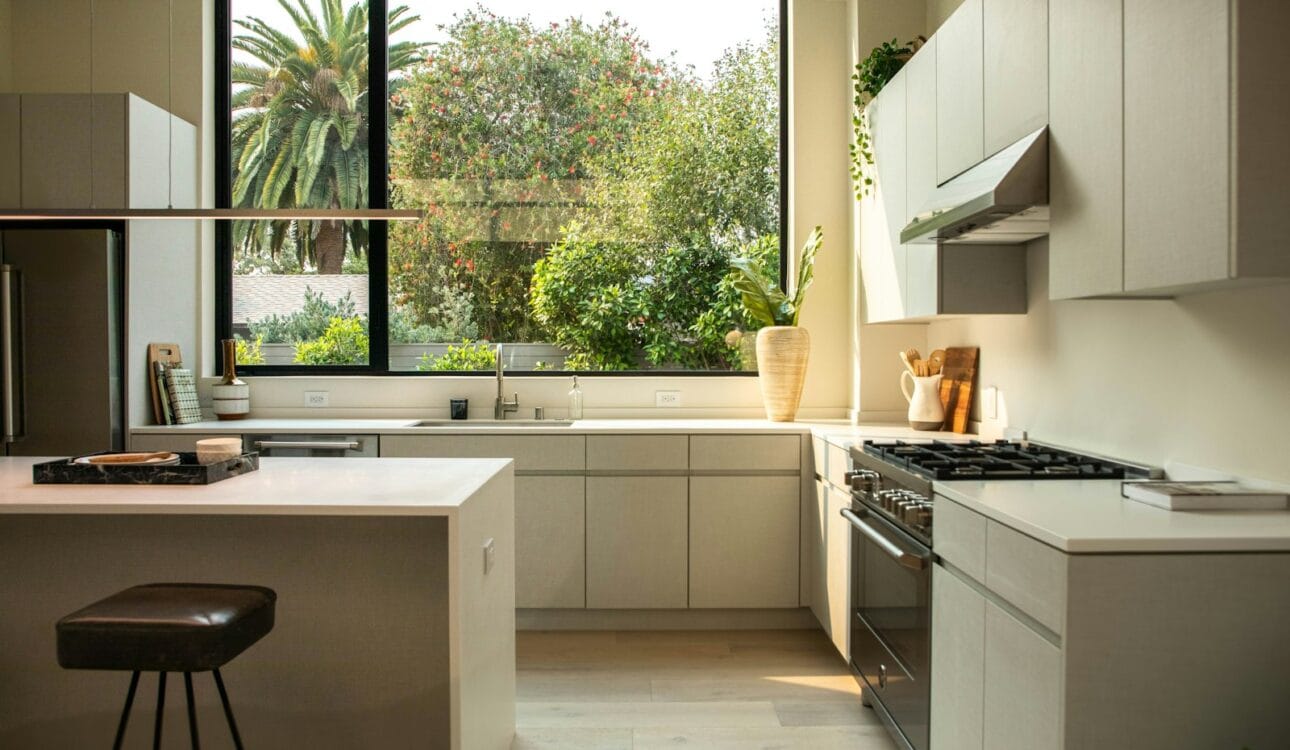
Handleless kitchens — sometimes called hidden-handle or seamless kitchens — have become one of the most requested styles in modern homes in Riyadh. With no visible knobs or bar handles, the cabinet fronts form clean, uninterrupted surfaces that make the kitchen look calm, spacious and architectural. But “handleless” is not one single system. There are several ways to open a cabinet without a traditional handle, and each has its own look, cost, practicality and maintenance needs. This guide explains the options honestly so you can decide whether a handleless kitchen suits your home and how to choose the right system.
At Modern Palace we have manufactured more than 5,000 custom kitchens in Riyadh since 2015, in seven materials: wood, tempered glass, aluminium, acrylic, formica, acrylic with formica, and saj. Many recent projects use integrated or hidden handles, especially in open kitchens that face the living area. Below we share what matters when making these kitchens work in daily family life, not just in photographs.
What is a handleless kitchen?
A handleless kitchen is a kitchen where the doors and drawers have no surface-mounted handles. Instead, the cabinets are opened using one of several methods: a recessed channel profile (often called a gola system), a finger pull shaped into the top edge of the door, a small edge profile fixed to the door, or push-to-open mechanisms that release the door when you press it. The result is a flat, continuous front that emphasises the material and colour of the doors rather than the hardware.
The style is closely associated with modern and minimalist design, but it can also work with warmer materials such as wood-effect finishes. It is particularly effective in open-plan kitchens, where the kitchen needs to blend with the living area, and in small kitchens, where fewer visual interruptions make the room feel larger.
The main handleless systems
1. Channel profile (gola system)
A horizontal aluminium channel runs along the cabinet line, recessed between the worktop and the top of the base doors, and between drawers. You slip your fingers into the channel and pull the door or drawer front. Vertical channels can be used on tall units. This is the most common “true” handleless system in modern kitchens.
- Look: clean horizontal shadow lines that give a strong architectural rhythm to the kitchen.
- Practicality: very comfortable for daily use; the grip is consistent across all cabinets.
- Considerations: the channel takes some internal cabinet space, requires precise manufacturing, and the profile colour (black, silver, champagne or matched) becomes part of the design.
2. Integrated finger pull (J-pull)
The top edge of each door or drawer front is shaped or fitted with a small profile so that you can hook your fingers behind it. There is no separate channel in the cabinet body.
- Look: a slim line at the top of each door, less pronounced than a full channel.
- Practicality: good for everyday use, and generally more economical than a full channel system.
- Considerations: the finish of the pull edge must be durable because it is touched constantly; on some materials the edge shows wear sooner.
3. Edge profile handles
A small aluminium profile is fixed along the top or side edge of the door. It looks almost invisible from the front but gives a solid grip.
- Look: minimal, with a fine metal line visible from some angles.
- Practicality: very comfortable and durable, and easy to apply to a wide range of door materials.
- Considerations: technically a handle, so the look is “near-handleless” rather than completely seamless.
4. Push-to-open (tip-on)
A mechanical or electrical push latch opens the door or drawer when you press the front. To close it, you push it back until it latches.
- Look: completely flat fronts with no lines at all — the most minimal option.
- Practicality: works well for wall cabinets and tall units that are opened less often. For heavy drawers used many times a day, some families find it less convenient, and small children may open doors easily.
- Considerations: on some systems the doors cannot use soft-close in the usual way, fingerprints appear where you push, and mechanisms need correct adjustment. Electrical push systems add cost and require power points.
Comparison of handleless systems
| System | Visual effect | Daily comfort | Relative cost | Best use |
|---|---|---|---|---|
| Channel (gola) | Strong horizontal lines | Excellent | Higher | Whole kitchen, modern open-plan |
| Integrated finger pull | Slim top line | Very good | Medium | Base and wall units |
| Edge profile | Fine metal line | Excellent | Medium | Any door material |
| Push-to-open | Completely flat | Good for occasional use | Medium to higher | Wall cabinets, tall units |
Advantages of a handleless kitchen
- A calm, modern appearance: without rows of handles, the kitchen looks tidy even when it is busy. The colour and texture of the doors become the main design feature.
- Better integration with open living spaces: in open-plan homes the kitchen reads more like furniture than a work area, which helps it sit comfortably next to the living and dining spaces.
- Visual space in small kitchens: fewer interruptions make the room feel larger and lighter.
- Safety in busy areas: there are no protruding handles to catch clothing, bags or children’s heads in narrow walkways or around an island.
- Easier cleaning of the fronts: flat surfaces are quick to wipe, with no handles to clean around.
Disadvantages and honest limitations
- Cost: full channel systems require extra profiles, more precise machining and careful installation, so they usually cost more than a kitchen with standard handles.
- Fingerprints and wear: you touch the edge or the face of the door instead of a handle. On high-gloss finishes, marks appear on the edges; on some materials the pull edge may wear over many years if it is not well sealed.
- Channels collect crumbs and dust: the horizontal channels need regular wiping, especially under the worktop edge.
- Precision is essential: in a handleless kitchen, uneven gaps or misaligned doors are very visible because nothing distracts the eye. Accurate manufacturing and installation matter more than in any other style.
- Push-to-open is not for every cabinet: for the most-used drawers, a channel or edge profile is usually more comfortable than pressing to open many times a day.
- Heavy loads: very heavy drawers of pots and pans need a secure grip; make sure the chosen system gives enough grip for the heaviest drawers.
Which materials suit handleless kitchens?
Almost every door material can be made handleless, but some combinations work better than others:
- Acrylic: the classic choice for a sleek, high-gloss handleless look. Gloss shows fingerprints, so many clients choose matte or super-matte acrylic for the most-touched areas.
- Formica: durable and practical with a wide range of colours and textures; works very well with channel and edge-profile systems.
- Acrylic with formica: a popular combination, for example acrylic on the visible island and formica on the working walls.
- Wood: handleless wooden doors give a warm minimal look; edges must be well sealed where fingers touch them.
- Tempered glass: glass fronts look striking with channel systems; edge-profile or push systems are less common on glass.
- Aluminium and saj: very practical in humid back kitchens; channel systems integrate naturally with aluminium frames.
Colour choices for the profiles
In a channel system, the profile colour is a design decision. A black profile creates strong contrast lines, which look dramatic with light doors. A silver or champagne profile gives a softer, more metallic accent. A profile matched to the door colour makes the lines almost disappear for the most seamless look. Consider the colour of the worktop, the sink, the taps and any other metal details so that everything works together. Samples placed side by side, and a 3D design, are the best way to decide.
Planning a handleless kitchen: practical tips
- Decide early: the channel system affects cabinet construction, drawer heights and worktop overhang, so it must be chosen before manufacturing starts.
- Mix systems where it makes sense: channels or edge profiles for base drawers, push-to-open for wall cabinets, and vertical channels for tall units. A consistent look can still be achieved.
- Check the heaviest drawers: ensure the pots-and-pans drawers have a firm grip and high-capacity runners. Our guide to hinges and drawer runners explains load ratings.
- Think about the dishwasher and integrated appliances: integrated appliance doors need to match the system, including push-to-open or channel openings.
- Plan the lighting: LED strips inside channels or under wall cabinets can highlight the clean lines and help at night. See our kitchen lighting guide.
- Consider children: push-to-open doors are very easy for small children to open; use child locks or choose channel systems for low cabinets containing cleaning products.
Handleless kitchens in Saudi homes
Kitchens in Saudi homes often work harder than kitchens in many other markets. Family meals are large, gatherings are frequent, and during Ramadan the kitchen may be in use for many hours every evening. This has some practical implications for a handleless design:
- Frequent use of the same drawers: the drawers near the hob and sink may be opened dozens of times a day. Channel or edge-profile systems are generally more comfortable here than push-to-open.
- Oily hands during cooking: when you cook heavy dishes, your hands may be oily. A channel lets you open with the tips of your fingers without touching the door face, which keeps fronts cleaner than push systems.
- Dust: in Riyadh, fine dust can settle in horizontal channels. A quick wipe as part of the regular cleaning routine keeps them looking sharp. Our kitchen cleaning and care guide covers this.
- Heat and sun: if the kitchen receives strong direct sunlight, choose finishes and edge seals that are suitable for heat, especially on doors next to windows.
- Open kitchens facing guests: many new villas open the kitchen onto the family living area. A handleless island or wall run keeps this view calm and elegant when guests are present.
Cost: what drives the price of a handleless kitchen?
It is not possible to give a fair fixed price without seeing your room, because the cost depends on several factors. Understanding them helps you compare quotations correctly:
- The system: full horizontal and vertical channels cost more than integrated finger pulls or edge profiles.
- The number of units: every drawer and door needs the system; a kitchen with many drawers has more profiles and fittings.
- The door material: acrylic, formica, wood, glass and aluminium have different prices and different machining needs.
- Push-to-open mechanisms: mechanical push latches are moderate in cost; electrical systems are more expensive and require power.
- Profile finish: standard silver or black profiles are usually more economical than special colours.
- Accessories and runners: high-capacity drawer runners and internal organisers add to the cost but make daily use easier.
When comparing quotations, make sure each one clearly states which handleless system is used on which cabinets, the profile finish, the runner type and the door material. Two quotations that both say “handleless” can describe very different products. Our guide on ready-made versus custom kitchens explains how to compare offers line by line.
Maintenance and care
A handleless kitchen is easy to live with if you follow a few simple habits:
- Wipe channels and pull edges weekly with a soft, damp microfibre cloth and a mild detergent.
- Avoid abrasive pads and strong solvents on acrylic and gloss finishes; they can scratch or dull the surface.
- Dry any water on the top edges of sink-area doors quickly, especially on wooden doors.
- If a push-to-open door starts opening too easily or not at all, the latch usually needs a small adjustment rather than replacement.
- Check door alignment once or twice a year; small hinge adjustments keep the gaps even, which matters in a handleless design.
Is a handleless kitchen right for you?
A handleless kitchen is a good choice if you like a clean, modern look, have an open kitchen that faces the living area, want to make a small kitchen feel larger, or simply prefer fronts without protruding handles. It may be less suitable if you prefer a classic style with decorative handles, if you want the lowest possible budget, or if you are not comfortable with the extra attention that high-gloss handleless fronts need. There is also a middle ground: edge profiles or slim integrated handles give most of the minimal look with the comfort and robustness of a real handle.
Handleless design in different kitchen layouts
The handleless style interacts with the kitchen layout. In a one-wall kitchen, long uninterrupted channels emphasise the length of the run and make the kitchen look like a single piece of furniture. In an L-shaped or U-shaped kitchen, the channels turn the corners and should line up perfectly on both walls; this requires careful measurement because walls are rarely perfectly square. On an island, handleless fronts are especially popular because the island is often the most visible part of an open kitchen, and a smooth side facing the living area looks elegant. In galley kitchens and narrow walkways, the absence of protruding handles gives a little more comfort when moving between the two runs. Our kitchen layouts guide explains each layout in detail.
Drawer-heavy designs and handleless systems
Modern kitchens increasingly replace base-cabinet doors with deep drawers, because drawers let you see and reach everything without bending. Handleless systems suit drawer-heavy designs well: a horizontal channel between each drawer gives a neat, layered look, and a consistent grip. When planning, decide the heights of the drawers together with the channel positions, so that the lines are even across the whole kitchen, including next to the oven and dishwasher. Remember that the channels reduce the internal height of each drawer slightly, so large pots should be assigned to the deepest drawers. Our guide to kitchen storage accessories suggests internal organisers that work well with handleless drawers.
Questions to ask before you order
- Which handleless system will be used on each type of cabinet: base drawers, base doors, wall units and tall units?
- What colour and finish will the profiles have, and will they match the taps, sink and other metal details?
- What drawer runners and hinges will be used, and what load can the heaviest drawers carry?
- How will integrated appliances such as the dishwasher and fridge open?
- Who will install and adjust the doors, and what does the warranty cover?
Clear, written answers to these questions protect you from surprises and make it easy to compare one quotation with another. A reliable manufacturer will be happy to show samples of each system and explain the differences in person.
Common mistakes with handleless kitchens
- Choosing push-to-open everywhere: it looks the most minimal, but for busy base drawers it can become tiring and leaves fingerprints in the middle of the doors.
- Ignoring the worktop overhang: with integrated finger pulls, the worktop edge must be positioned so that fingers can reach behind the door comfortably. Too much overhang makes opening awkward.
- Mixing systems without a plan: combining channels, edge profiles and push latches can work well, but only when the lines are planned so that the overall design still looks consistent.
- Choosing high gloss without considering care: high-gloss handleless fronts look stunning but show marks. If you prefer less wiping, consider matte finishes for the lower cabinets.
- Underestimating installation precision: handleless kitchens reveal every uneven gap. Make sure the same team that manufactures the kitchen also installs and adjusts it.
Wall cabinets and tall units
Wall cabinets can be opened in several ways in a handleless kitchen. Some designs extend the doors a few centimetres below the cabinet body so you can grip the bottom edge. Others use a bottom channel, push-to-open latches, or lift-up mechanisms with push opening. Tall units such as pantries and appliance housings often use vertical channels, which also create elegant vertical lines that balance the horizontal channels of the base units. The best choice depends on the height of the users: if the family members are of very different heights, make sure everyone can reach and open the wall cabinets comfortably.
How we build handleless kitchens
We start with a free visit to measure your room precisely, then discuss how your family uses the kitchen and which cabinets are opened most often. In the free 3D design we show the handleless system on every cabinet, the profile colour and the line layout, so you can see the final look before manufacturing. Once you approve the design, we manufacture the kitchen in our Riyadh factory with precise machining for the profiles, and our own team installs and adjusts every door and drawer so that the gaps are even. Every kitchen comes with a 10-year written warranty, and we serve Riyadh, Al-Ahsa, Buraidah and Hail. You can see examples in our virtual showroom.
Summary
Handleless kitchens offer a calm, modern look that suits open-plan homes and small kitchens especially well. Channel (gola) systems give the most comfortable true handleless result, integrated finger pulls and edge profiles are practical middle options, and push-to-open is best kept for less-used cabinets. Choose the system early, match it to your materials and daily habits, plan for easy cleaning, and insist on precise manufacturing and installation — because in a handleless kitchen, every detail shows.
Frequently asked questions
Are handleless kitchens practical for daily use?
Yes, especially with channel (gola) systems or edge profiles, which give a comfortable, consistent grip. Push-to-open is better kept for wall cabinets and less-used units.
Do handleless kitchens cost more?
Full channel systems usually cost more than standard handles because of the extra profiles and precise machining. Integrated finger pulls and edge profiles are more economical options with a similar minimal look.
Which material is best for a handleless kitchen?
Acrylic and formica are very popular for handleless kitchens. Acrylic gives a sleek gloss or matte look, while formica is durable and practical. Wood, glass and aluminium can also be made handleless with the right system.
Do handleless kitchens show fingerprints?
High-gloss fronts show marks more easily, especially with push-to-open doors. Matte finishes and channel systems, where you touch the channel rather than the door face, reduce visible fingerprints.
Can I combine handleless and regular handles?
Yes. Some families choose handleless base units and fine edge profiles or slim handles on tall units. The key is to plan the lines so the kitchen still looks consistent.
Thinking about a handleless kitchen?
Book a free measurement and 3D design to see which handleless system suits your room, materials and daily routine.